
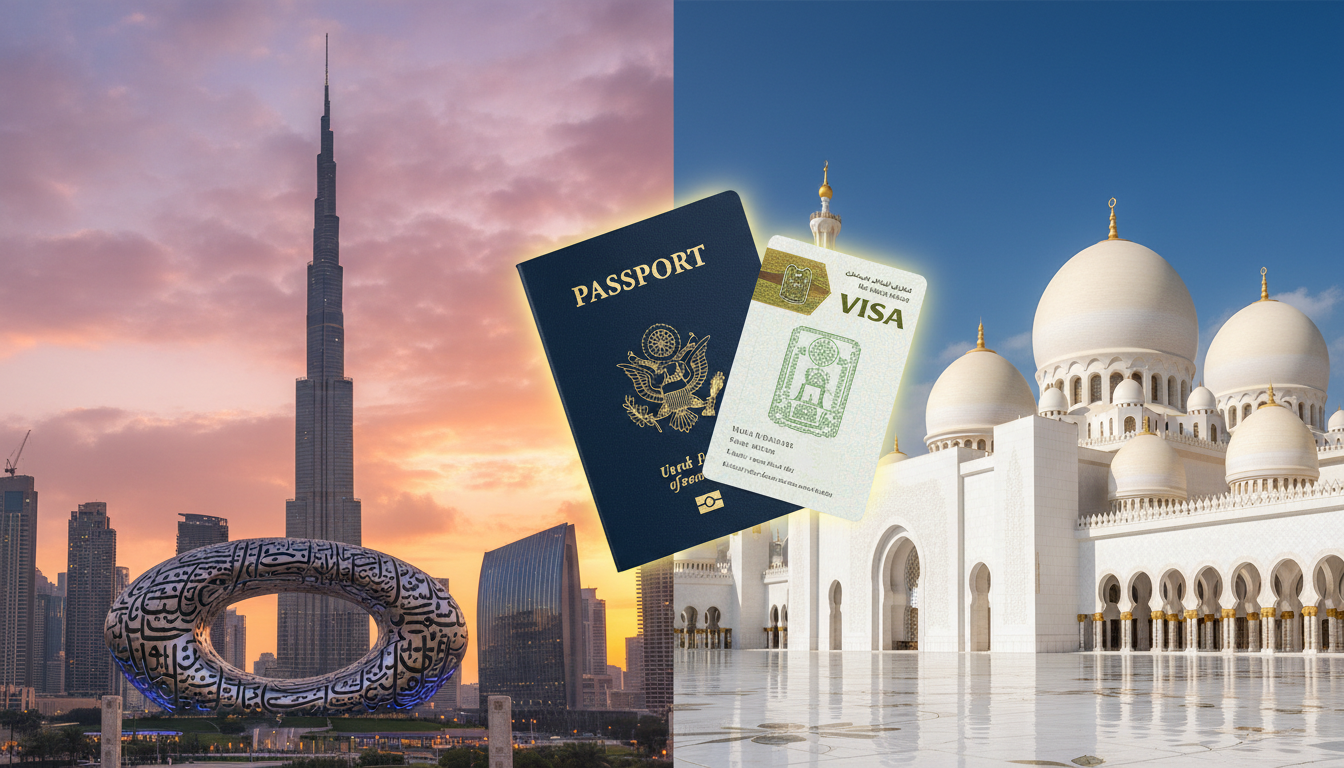
Choosing the right Abu Dhabi vs Dubai visa for US citizens is the critical first step for Americans planning to relocate, work, or explore the United Arab Emirates in 2026. While both emirates operate under federal UAE immigration laws, their specific application processes, costs, and lifestyle benefits for expats can differ significantly. Whether you are a remote worker chasing the sun or a family seeking tax-free living, understanding the nuances between the glitzy commercial hub of Dubai and the wealthy, cultural capital of Abu Dhabi is essential.
The Great Debate: Where Should Americans Apply?
For decades, Dubai has been the poster child of Middle Eastern tourism and expat life. However, Abu Dhabi has aggressively streamlined its visa policies to attract US talent. In 2026, the decision largely depends on your specific goals: are you looking for a fast-paced entrepreneurial ecosystem or a family-oriented, slightly more relaxed environment?
US citizens hold a powerful passport, granting them visa-on-arrival status for tourism. However, for long-term residency, business setup, or remote work, you must navigate the specific entry permits of each emirate. Let’s break down the pros and cons.
1. The Digital Nomad Visa: Dubai vs. Abu Dhabi
The rise of remote work has made the UAE a top destination for American digital nomads. Both cities offer pathways, but the execution differs.
Dubai’s Virtual Working Program
Dubai was the pioneer in launching the one-year virtual working program. It is designed specifically for professionals who want to live in Dubai while working for an employer based outside the UAE (e.g., in the USA).
- Pros: extremely fast processing (often under 7 days), access to a massive expat community, and world-class coworking spaces.
- Cons: Higher cost of living and rent prices compared to other regions.
- Requirement: Proof of employment with a salary of at least $3,500 USD per month.
Abu Dhabi’s Remote Work Visa
Abu Dhabi offers a similar remote work visa, often marketed under its “Creative Visa” or freelancer categories. The capital is positioning itself as a hub for creatives and innovators.
- Pros: Generally lower application fees and slightly lower rent costs for larger spaces. It is ideal for writers, artists, and consultants.
- Cons: The bureaucracy can sometimes feel slightly slower than Dubai’s streamlined digital systems, though this is improving rapidly in 2026.
2. The Golden Visa: The 10-Year Game Changer
For US citizens looking for long-term stability without the need for an employer sponsor, the UAE Golden Visa is the gold standard. In 2026, the requirements have broadened.
Dubai Investment Route
Dubai remains the hotspot for real estate investors. Buying property worth AED 2 million (approx. $545,000 USD) grants you the 10-year visa. The real estate market here is liquid, fast-moving, and offers high rental yields.
Abu Dhabi Talent Route
Abu Dhabi has been very generous in granting Golden Visas to doctors, scientists, and coders. If you are a US citizen with a PhD or specialized degree, Abu Dhabi may process your nomination faster than Dubai due to their specific labor shortages in healthcare and engineering sectors.
3. Cost of Living and Lifestyle Considerations
Your visa choice often dictates where you will live, which impacts your wallet.
Dubai: The City of Gold
Dubai is expensive. Rent in areas like Dubai Marina or Downtown can rival New York or San Francisco. However, the lifestyle is unmatched—beach clubs, nightlife, and limitless shopping. It is the best choice for single Americans or young couples.
Abu Dhabi: The Cultural Capital
Abu Dhabi is wealthier per capita but quieter. Rents are generally 20-30% cheaper than Dubai for comparable luxury. It is greener, with more parks and cultural sites like the Louvre Abu Dhabi and the Sheikh Zayed Grand Mosque. It is often the preferred choice for US families.
4. Mandatory Requirements: Health Insurance
Regardless of whether you choose Abu Dhabi or Dubai, one requirement remains strict for US citizens: mandatory health insurance. The UAE government does not provide free healthcare to expats.
In Dubai, the insurance coverage required for visa issuance is often tied to the specific visa type. In Abu Dhabi, the requirements for health insurance coverage are generally stricter and more comprehensive before the visa is stamped. Failing to secure proper coverage can result in significant fines.
Before you fly, make sure you review the best options for travel insurance that covers COVID-19 and potential medical evacuation, as this is often a prerequisite for the initial entry permit.
5. Processing Times and Efficiency in 2026
Time is money. How long will you wait?
- Dubai: Known for the fastest processing times in the region. Express services can sometimes turn around a residency visa in 48 hours after the medical test.
- Abu Dhabi: While efficient, the process can take 5 to 10 working days. However, the “Tamm” government services platform has digitized much of the process, closing the gap with Dubai.
Conclusion: The Verdict
So, regarding the Abu Dhabi vs Dubai visa for US citizens debate, who wins?
If you crave speed, nightlife, and a high-energy business environment, Dubai is your best bet. The infrastructure for freelancers and entrepreneurs is world-class.
If you prefer a family-friendly environment, lower rents, and a focus on culture and arts, Abu Dhabi is the superior choice for 2026. The capital welcomes American talent with open arms and slightly more relaxed pacing.
Relocating to the Middle East is a thrilling adventure. However, amidst the paperwork and logistics, do not forget to take care of your mental and spiritual well-being. For those seeking spiritual peace and mental wellness techniques during this transition, visit Wazifa Hub.