
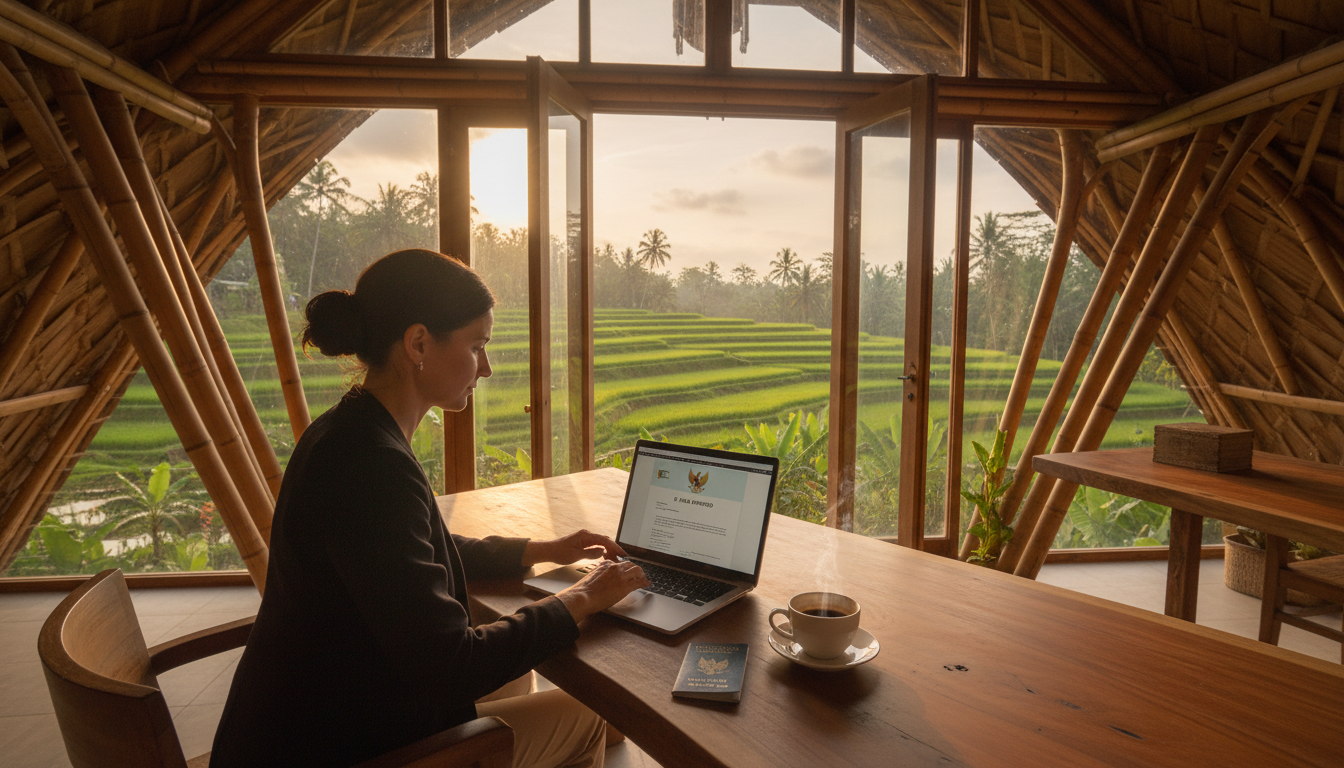
Navigating the complex Indonesia work visa requirements 2026 is the absolute first step for any American professional dreaming of trading their cubicle for a skyline view in Jakarta or a rice terrace office in Bali. As Southeast Asia’s largest economy continues to modernize its immigration infrastructure, the regulations for foreign workers have evolved significantly. This guide serves as your definitive roadmap to legally living and earning in the Emerald of the Equator.
Understanding the Indonesian Work Visa Landscape
Before packing your bags, it is crucial to understand that Indonesia does not technically have a single “work visa.” Instead, the process involves a series of permits that grant you permission to enter, stay, and work. For US citizens, the terminology can be confusing. In 2026, the system relies heavily on the ITAS (Izin Tinggal Terbatas), often still referred to by its physical card name, KITAS.
Specifically, you will be looking at the C312 Visa (formerly index 312) or the newer E-Visa classifications for foreign experts. This permit is strictly tied to a sponsoring company (PT PMA or a local PT). You cannot simply fly to Bali and start looking for a job; the sponsorship must be secured before the application process begins.
The 2026 Prerequisites: Who is Eligible?
The Indonesian government prioritizes local employment. Therefore, to secure a work permit, your sponsoring company must prove that the position cannot be filled by an Indonesian national. Generally, this means foreign applicants must meet specific criteria:
- Education: You typically need a degree related to the job position.
- Experience: Proof of at least 5 years of work experience in the relevant field.
- Competency: A certificate of competence or a statement showing you are an expert in your field.
- Insurance: Proof of health insurance coverage for your stay in Indonesia.
The Role of the RPTKA
The process starts with your employer. They must submit an RPTKA (Rencana Penggunaan Tenaga Kerja Asing), which is a Foreign Worker Utilization Plan, to the Ministry of Manpower. Once this plan is approved, the government effectively agrees that your specific role is necessary for the company.
Step-by-Step Application Process for US Citizens
The digitization of the Indonesian immigration system has streamlined the process, but it remains bureaucratic. Here is the chronological path for 2026:
Step 1: RPTKA Approval
Your employer submits the RPTKA to the Ministry of Manpower. This includes paying the DPKK (Development Fund for Compensation of Foreign Workers), which costs $100 USD per month, usually paid 12 months in advance ($1,200 total).
Step 2: The E-Visa Application
Once the notification is issued by the Ministry of Manpower, your sponsor applies for the E-Visa (C312) via the Directorate General of Immigration website. As a US citizen, you no longer need to visit an Indonesian embassy abroad to collect a physical sticker; the E-Visa is sent via email.
Step 3: Entry and ITAS Activation
Upon arriving in Indonesia with your E-Visa, you have a set window (usually 30 days) to report to the local immigration office to provide biometric data (fingerprints and photo). This converts your entry visa into the ITAS (Limited Stay Permit). This is the “Golden Ticket” that allows you to reside in Indonesia.
Required Documents Checklist
To ensure a smooth approval of your Indonesia work visa requirements 2026 application, have the following digitized and ready:
- Color scan of your Passport (must have 18 months validity remaining).
- Passport-sized photographs with a red background (standard Indonesian formality).
- University Degree (color scan, in English or translated).
- Curriculum Vitae (CV) updated to reflect 5+ years of experience.
- Proof of Health Insurance.
- Domicile Letter (SKTT) from your landlord in Indonesia (required for the final KITAS).
Cost Breakdown: What to Expect
For American expats, the costs can be split between government fees and agent fees. Unless your company has a dedicated HR team familiar with expat formalities, using a visa agency is highly recommended.
- DPKK (Government Tax): $1,200 USD per year.
- Visa Fee: Approx. $150 USD.
- Agent Fees: Can range from $800 to $1,500 USD depending on the service level (standard vs. expedited).
Alternative: The Digital Nomad Route
If you are a freelancer or work for a US company and do not have an Indonesian entity to sponsor you, the C312 Work Visa is not for you. Instead, you should investigate the “Remote Worker” designation under the E33G visa or the Second Home Visa.
Understanding the nuances between a full work permit and a remote stay permit is vital. For more insights on working remotely across borders, check out our detailed breakdown in the digital-nomad-visa category.
Living in Indonesia: Beyond the Paperwork
Once the legalities are settled, life in Indonesia offers an incredible blend of culture, affordability, and adventure. Whether you are navigating the traffic of Jakarta to get to a high-rise meeting or setting up your laptop in a bamboo cafe in Ubud, the lifestyle is unmatched.
However, moving your life across the Pacific requires preparation beyond just visas. You must consider housing, local banking, and tax residency. Indonesia operates on a worldwide income tax system for residents, so consulting with a tax professional in both the US and Indonesia is essential to avoid double taxation, despite the tax treaty existence.
Safety and Insurance
While Indonesia is generally safe, healthcare infrastructure varies. Securing comprehensive travel-insurance that includes medical evacuation is non-negotiable for expats.
Conclusion
Meeting the Indonesia work visa requirements 2026 requires patience, organization, and a willing sponsor. While the bureaucracy can be daunting, the reward is the opportunity to live in one of the world’s most dynamic and culturally rich nations. Ensure your documents are pristine, your passport is valid, and your sponsor is compliant.
Relocating to a new country can take a toll on your peace of mind. If you are seeking spiritual grounding or mental wellness techniques to handle the stress of migration, visit wazifahub.com for resources on spiritual peace.