
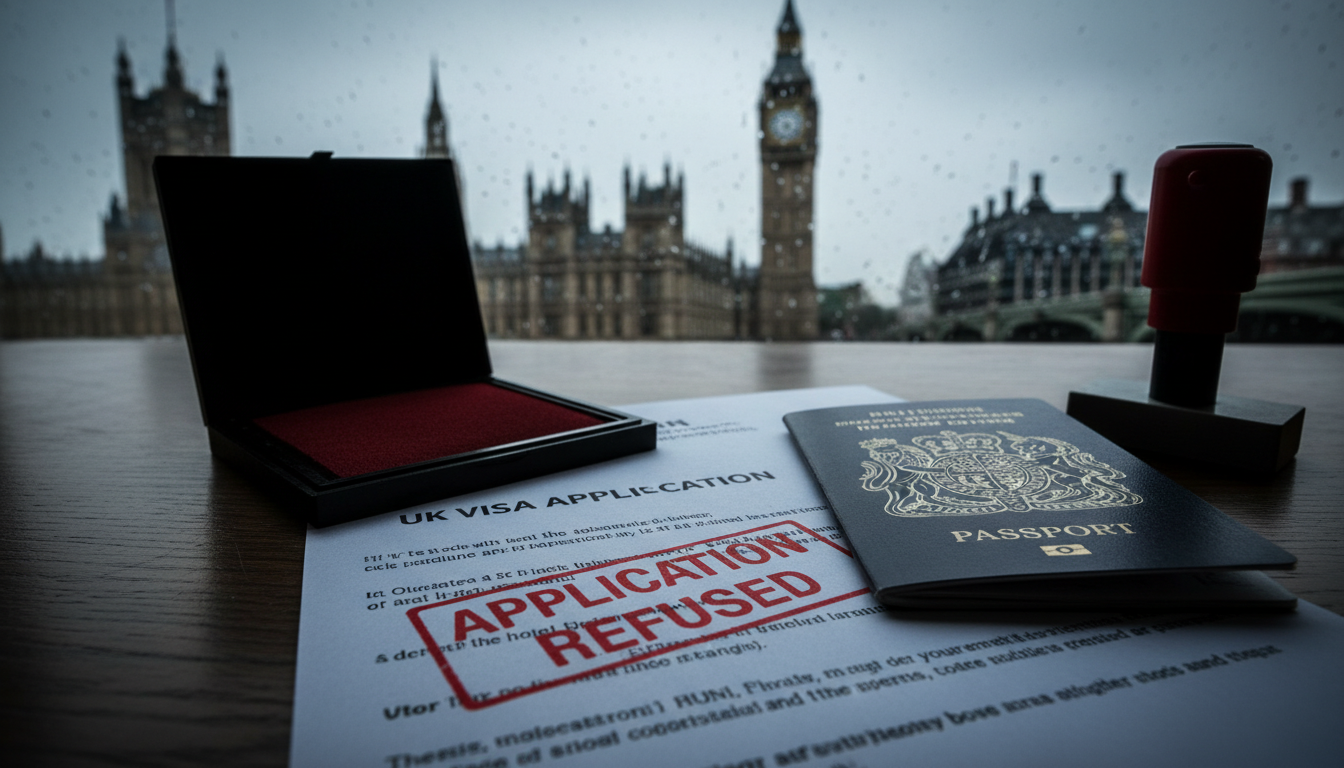
Understanding the primary UK tourist visa rejection reasons 2026 is crucial before you book that dream flight to Heathrow or plan your Highlands road trip. As immigration policies tighten and digital borders become a reality with the full rollout of the Electronic Travel Authorisation (ETA) scheme, the margin for error in your application has vanished. Whether you are a permanent resident in the USA holding a foreign passport or a global traveler, a rejection stamp is more than just an inconvenience; it is a permanent mark on your immigration record.
The United Kingdom Home Office is notorious for its strict scrutiny. In 2026, the algorithms and officers assessing your application are looking for specific red flags that many applicants completely overlook. Below, we break down the seven most shocking reasons travelers face rejection and how you can safeguard your application.
1. The “Funds Parking” Trap
One of the most common reasons for refusal is what immigration officers call “funds parking.” This occurs when a large sum of money suddenly appears in your bank account shortly before you print your statement for the visa application.
If your average balance is $2,000, and you suddenly deposit $10,000 a week before applying without a credible source, the Home Office will flag this. They do not just look at the final figure; they look at the history of your funds to ensure they are genuinely yours and disposable.
2. Insufficient “Ties to Home”
The burden of proof lies on you to convince the officer that you will leave the UK at the end of your visit. If you cannot prove strong social and economic ties to your country of residence (e.g., the USA), your application will likely fail.
What Counts as Strong Ties?
- Employment: A letter from your employer stating your role, salary, and approved leave dates.
- Property: Deeds or mortgage statements proving homeownership.
- Family: Evidence of immediate family members who rely on you back home.
3. The ETA Misunderstanding (New for 2025-2026)
By 2026, the UK’s Electronic Travel Authorisation (ETA) system will be fully operational for almost all non-visa nationals (including US citizens) and many visa nationals transiting. A shocking number of travelers are rejected simply because they confuse the ETA with a Standard Visitor Visa, or vice versa.
If you have a criminal record or previous immigration violations, applying for an ETA might result in an automatic rejection, requiring you to apply for a full visa instead. Failing to declare past issues on an ETA application is considered deception.
4. Inconsistent Itineraries vs. Financial Means
Does your itinerary match your bank account? If you state you are staying at the Ritz London but your bank statement shows a modest income, the officer will doubt your credibility. Conversely, if you have high funds but no clear plan, it raises suspicion regarding your intentions.
Your travel plan must be logical. If you are applying for a 6-month visa but only have funds for two weeks, you must clearly explain that you only intend to stay for two weeks initially.
5. Unexplained Travel History Gaps
The UK shares immigration data with the USA, Canada, Australia, and New Zealand (the Five Eyes alliance). If you have been refused a visa or deported from any of these countries and fail to declare it, your UK application will be instantly rejected for deception.
Even if you haven’t been deported, gaps in your travel history or staying longer than authorized in other countries can paint a picture of a traveler who does not respect immigration rules.
6. Lack of Travel Insurance Awareness
While travel insurance is not always a mandatory document to submit with the initial application for all visa types, the lack of intent to cover potential medical costs can be a negative factor during border interviews or specific long-term visitor applications. Furthermore, in a post-pandemic world, officers want assurance that you will not become a burden on the NHS (National Health Service).
Always be prepared to show that you can afford private medical care or have comprehensive travel insurance that covers your stay.
7. The “Generic Sponsor” Letter
Using a sponsor (friend or family) in the UK to support your application is risky if not done correctly. A shocking reason for rejection is a sponsorship letter that feels templated or lacks supporting documents.
If your uncle in Birmingham is sponsoring you, he must provide:
- His passport copy and immigration status.
- His council tax bills and utility bills (to prove accommodation space).
- His bank statements (to prove he can feed/support you).
A simple letter saying “I will take care of everything” is legally insufficient and will lead to a refusal.
Conclusion
Securing a UK visa in 2026 requires meticulous attention to detail. It is not just about having money; it is about proving your genuine intent as a visitor. Avoid these seven shocking mistakes, organize your paperwork, and ensure your “ties to home” are undeniable.
The visa process can be stressful and mentally draining. If you are feeling anxious about the outcome or need spiritual grounding during the waiting period, many travelers find solace in prayer and meditation. For resources on spiritual peace and mental wellness, you can visit Wazifa Hub.