
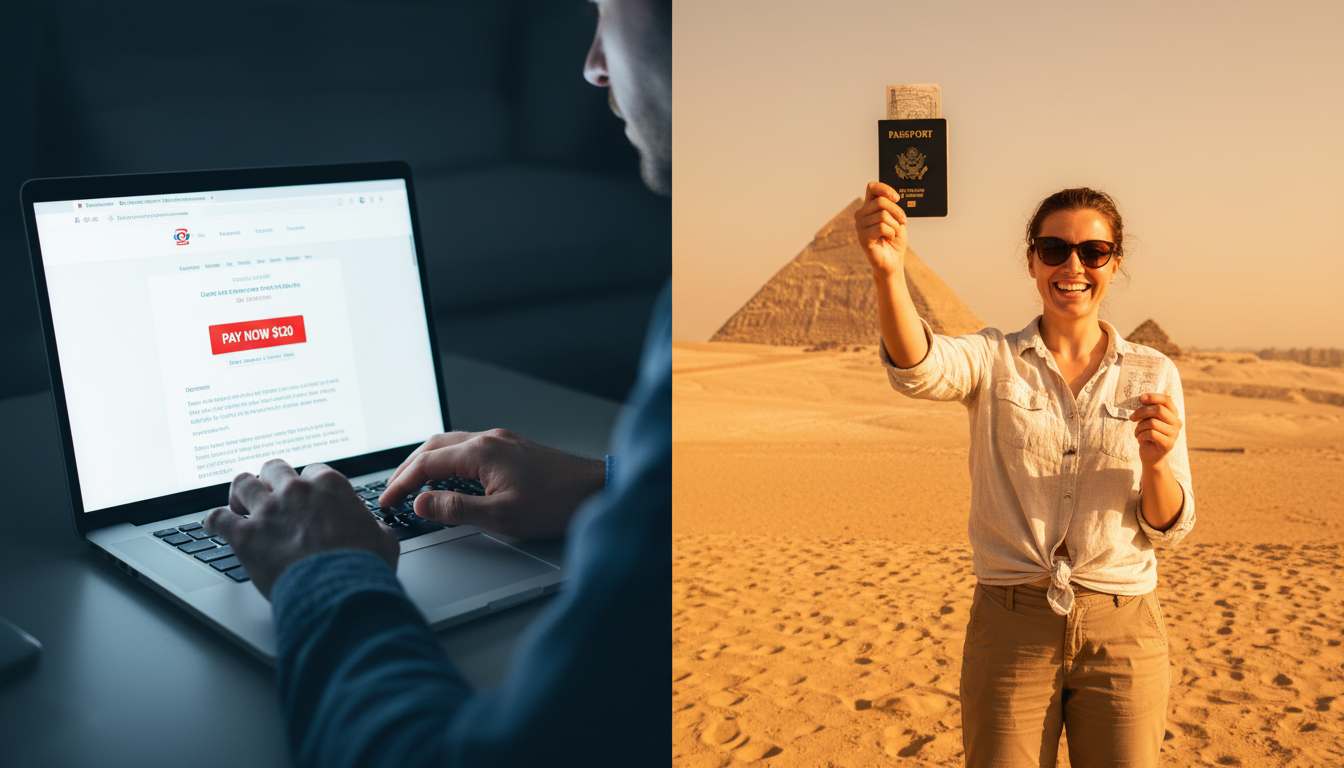
As international travel surges, learning to identify and avoid Egypt e-visa scams is crucial for every American tourist planning a 2026 visit to the Pyramids. Nothing ruins a dream vacation faster than arriving at the airport only to realize your visa document is a forgery or that you have overpaid hundreds of dollars to a predatory third-party agent. With the Egyptian government pushing for digital entry facilitation, cybercriminals have become increasingly sophisticated, creating “copycat” portals that mimic official government channels with frightening accuracy.
In this comprehensive guide, we will dissect the anatomy of these scams, provide you with the exact URL you need to use, and offer strategies to protect your personal data and your wallet.
The Rise of “Copycat” Visa Websites in 2026
The most prevalent form of the Egypt e-visa scams involves Search Engine Optimization (SEO) manipulation. When you type “Apply for Egypt Visa” into Google or Bing, the first few results are often advertisements. These are not the official government websites. They are private agencies designed to look exactly like the official portal.
These third-party sites are often legally gray operations. They technically do process your visa, but they charge a massive “service fee” on top of the standard government cost. However, a growing number are outright fraudulent phishing sites that steal your passport data and credit card information without ever sending you a valid visa.
Why US Tourists are Primary Targets
American travelers are often targeted because of the strength of the dollar and a cultural tendency to trust top search results. Scammers know that a US citizen might not blink at a $100 fee, assuming it is the standard bureaucratic cost, whereas the actual cost is significantly lower.
How to Identify the Official Portal vs. a Scam
To ensure a safe application, you must know the difference between the legitimate government source and a trap. Here is the golden rule for 2026:
- The Official Website: The ONLY official government portal for electronic visas is visa2egypt.gov.eg. Note the .gov.eg extension.
- The Scam/Agent Websites: These often use URLs like egyptvisa.com, visa-egypt-online.org, or official-egypt-visa.net. They use official-sounding names but lack the government domain extension.
Red Flags: Analyzing the “Fake” Sites
If you find yourself on a website and you aren’t sure if it’s legitimate, look for these tell-tale signs of Egypt e-visa scams:
1. Exorbitant Fees
As of late 2025/early 2026, the standard cost for a single-entry e-visa for US citizens is roughly $25 USD. Scam sites will often charge anywhere from $80 to $150 USD. They may hide this in fine print as a “processing fee” or “concierge service.” If you see a checkout total over $25 (excluding minor bank transaction fees), close the tab immediately.
2. Immediate Approval Promises
No website can guarantee immediate approval. The official government process takes time (usually up to 7 days). Sites promising “Instant Visa Approval” or “1-Hour Rush Service” are lying to get your money quickly.
3. Poor English and Design Glitches
While the official Egyptian site isn’t perfect, scam sites often have broken links, generic stock photos of the Sphinx that don’t match the government branding, or odd grammatical errors in their “Terms of Service.”
Protecting Your Trip: Insurance and Backup Plans
Falling victim to a visa scam doesn’t just hurt your wallet; it can cancel your entire trip if you are denied boarding. This is where comprehensive preparation is vital. Beyond just securing the right visa, you must ensure your financial investment in the trip is protected against fraud, cancellations, or medical emergencies.
We strongly recommend looking into robust coverage. You can read more about selecting the right policy in our guide to travel insurance, which covers what to do if administrative errors or scams force you to delay your vacation.
Visa on Arrival: Is it Safer?
For US citizens, there is an alternative to the e-visa: the Visa on Arrival. If you are nervous about online Egypt e-visa scams, you can simply fly to Cairo International Airport and purchase the visa there.
The Process:
- Land at the airport.
- Before Passport Control, go to the bank kiosks (usually Banque Misr or NBE).
- Pay $25 USD in cash (crisp, new bills are preferred).
- Receive a sticker, place it in your passport, and proceed to immigration.
While this avoids online scams, it does carry the risk of long lines or being denied entry if regulations change suddenly. However, for many, the physical exchange of cash for a visa sticker is more reassuring than a digital transaction.
Step-by-Step: The Safe Application Method for 2026
If you prefer to have your paperwork sorted before you fly (which is recommended for peace of mind), follow these steps to avoid fraud:
- Navigate Directly: Type
visa2egypt.gov.egdirectly into your browser address bar. Do not click on Google Ads. - Create an Account: You must register an account on the official portal to apply.
- Upload Documents: Ensure your passport scans are clear. Scammers often don’t ask for the upload because they aren’t actually processing the visa.
- Pay the $25: Use a credit card with fraud protection.
- Wait: Processing usually takes 3 to 7 business days.
- Print: Once emailed to you, print at least two copies. Do not rely solely on the digital version on your phone.
Conclusion: Stay Vigilant
Egypt is a magnificent destination, rich in history and culture. Don’t let the administrative hurdle of entry requirements dampen your spirit. By staying alert to Egypt e-visa scams and sticking strictly to the government domain, you ensure that your money goes toward your experience—like a Nile cruise or a visit to Luxor—rather than into the pockets of cybercriminals.
Travel planning can be stressful, especially when navigating potential scams. If you are feeling overwhelmed by the anxiety of travel preparations or need to find a moment of spiritual grounding before your journey, consider visiting Wazifa Hub for resources on mental wellness and spiritual peace.