
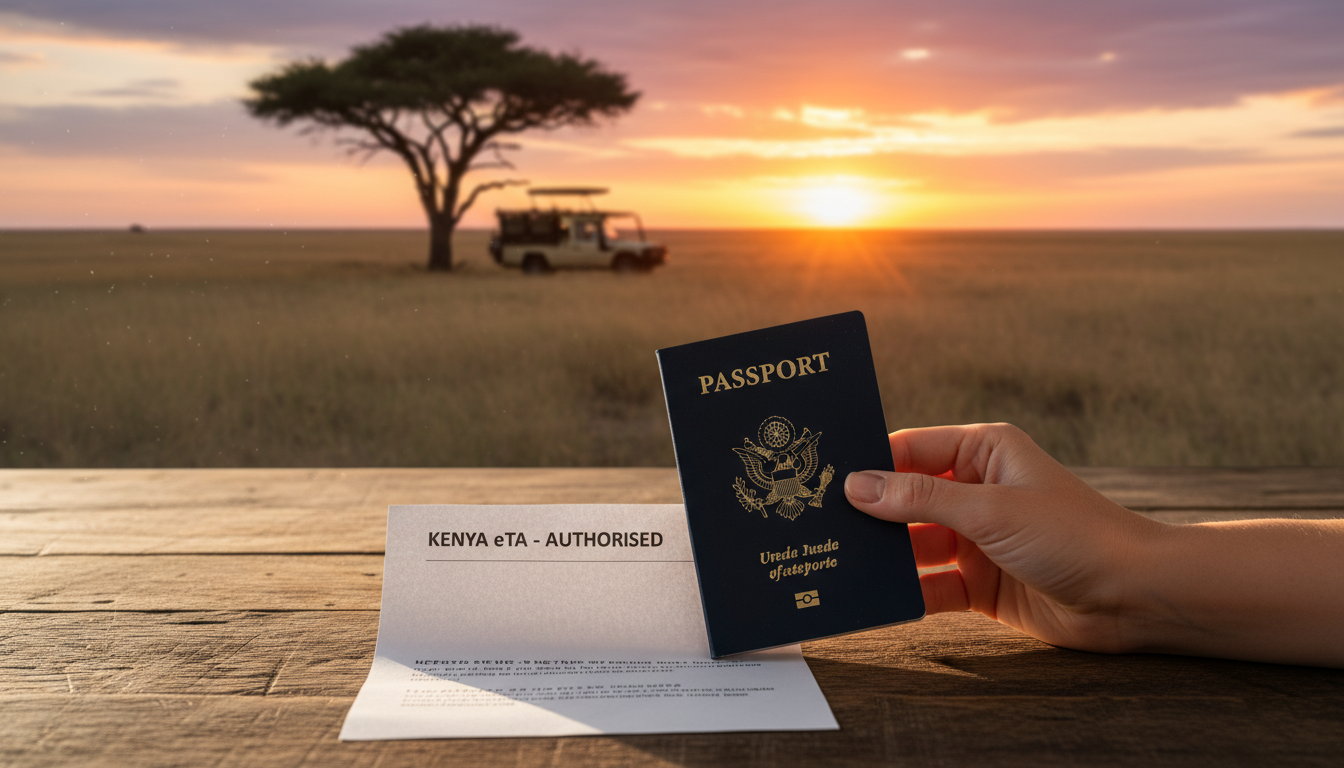
Understanding the Kenya entry requirements for US citizens 2026 is the absolute first step before you book that dream safari to the Maasai Mara. As travel regulations evolve, Kenya has streamlined its borders, moving away from traditional visas to a digital-first approach that American travelers must navigate carefully to avoid being turned away at the boarding gate.
Whether you are heading to Nairobi for business or the coast for leisure, the days of “visa on arrival” are long gone. In 2026, compliance is key. This guide outlines every single document, digital form, and health certificate you need to carry to ensure a seamless entry into East Africa’s most vibrant destination.
The New Normal: The Kenya eTA (Electronic Travel Authorisation)
Since the historic shift in 2024, Kenya became a “visa-free” country, but that does not mean “paperwork-free.” The most critical component of the Kenya entry requirements for US citizens 2026 is the Electronic Travel Authorisation (eTA).
Every US citizen, including infants and children, must obtain an approved eTA before boarding their flight. This digital system screens travelers for security and health risks prior to travel.
How to Apply for the eTA
- Timeline: Apply at least 3 days before travel, though we recommend 2 weeks to be safe.
- Cost: Approximately $30 USD (subject to change by the Kenyan government).
- Validity: The eTA is valid for a single entry and is specific to the travel dates provided in your application.
The Essential Document Checklist for 2026
Beyond the eTA, US travelers must present a specific portfolio of documents at immigration control at Jomo Kenyatta International Airport (NBO) or Mombasa (MBA).
1. Valid US Passport
Your passport must be valid for at least six months beyond your intended date of arrival in Kenya. Additionally, ensure you have at least two blank pages for entry and exit stamps. Immigration officers in Kenya are notorious for requiring ample space for stamping.
2. Proof of Onward or Return Travel
You must prove that you do not intend to stay in Kenya indefinitely. A confirmed round-trip flight ticket or a ticket to an onward destination is mandatory. If you are traveling overland to Tanzania or Uganda, have your bus tickets or safari itinerary handy.
3. Detailed Travel Itinerary & Accommodation
Immigration officers may ask, “Where are you staying?” You need to provide:
- Hotel booking confirmations for your first few nights.
- If staying with friends or family, an invitation letter from your host along with a copy of their Kenyan ID or passport.
- If on a safari, a letter from the tour operator confirming the booking.
Health Requirements: Yellow Fever and Beyond
Health security is a major pillar of the Kenya entry requirements for US citizens 2026. While COVID-19 restrictions have largely relaxed, other health protocols remain strict.
Yellow Fever Certificate
Technically, a Yellow Fever vaccination certificate is only mandatory if you are arriving from a country with a risk of Yellow Fever transmission (like Ethiopia or Brazil). However, it is highly recommended for all travelers. If you have a long layover (more than 12 hours) in a high-risk country, this certificate becomes mandatory. Given that you are traveling to a tropical zone, having the “Yellow Card” prevents any disputes at the health desk.
Malaria Prophylaxis
While not a document you show at the border, carrying your prescription for Malaria medication is wise. Customs may occasionally inspect medication to ensure it is for personal use.
Financial Solvency and Insurance
Travel implies risk, and entry requirements often include proof that you can support yourself financially during your stay without becoming a burden on the state.
Proof of Funds
While rarely asked for, it is prudent to have a recent bank statement or a credit card with a sufficient limit available, especially if you do not have a pre-paid safari package.
Mandatory Medical & Evacuation Insurance
Healthcare in private Nairobi hospitals is excellent but expensive. In remote safari parks, an air evacuation can cost upwards of $5,000 USD immediately. We strongly advise securing comprehensive coverage. You can explore options for comprehensive travel insurance that specifically covers medical evacuation in East Africa.
Customs Regulations: The Plastic Ban
When packing, remember that Kenya enforces one of the world’s strictest bans on single-use plastic bags. Do not pack your shoes or liquids in Ziploc bags or grocery bags. Using or carrying plastic bags can lead to heavy fines upon entry. Use packing cubes or cloth bags instead.
Final Thoughts for US Travelers
Traveling to Kenya is a life-changing experience. By ensuring you meet all Kenya entry requirements for US citizens 2026, you ensure that your trip starts with excitement rather than stress at the immigration counter. Prepare your documents digitally and physically, respect the local laws, and enjoy the warm hospitality of the Kenyan people.
For those seeking spiritual peace or mental wellness tips to handle the stress of international travel planning, visit Wazifa Hub for calming resources.