
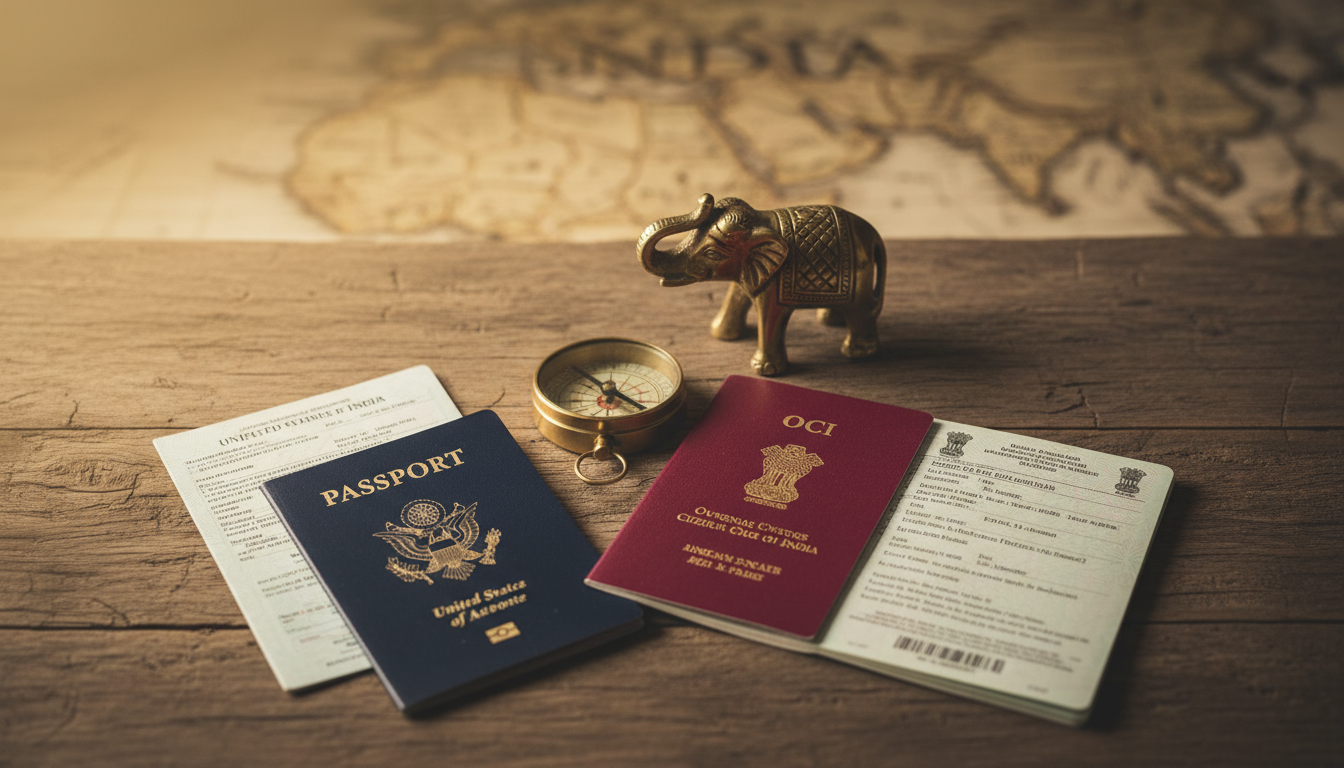
Choosing between an India Visa vs OCI Card for US Citizens is the first critical step for Indian-Americans and travelers planning a journey to the subcontinent in 2026. As travel regulations evolve and digital processing becomes the norm, understanding the distinct advantages of the Overseas Citizenship of India (OCI) card versus the standard Indian e-Visa is essential for saving money and avoiding immigration headaches. Whether you are visiting family in Mumbai or touring the Golden Triangle, this guide breaks down exactly which option suits your travel profile.
The Basics: Defining the Contenders
Before diving into the financial and logistical comparisons, it is vital to understand what these documents actually represent for a US passport holder.
The Indian e-Visa
The Indian e-Visa is a purely electronic travel authorization. It is designed for tourism, business, medical visits, or conferences. For US citizens, the most popular options are the 30-day, 1-year, and 5-year tourist e-Visas. It provides a temporary right to enter India but does not confer any residency rights or long-term status.
The OCI Card (Overseas Citizenship of India)
Often mistaken for dual citizenship (which India does not permit), the OCI card is actually a life-long visa. It is a smart card that allows multiple entries and multi-purpose life-long visits to India. It is specifically designed for foreign citizens of Indian origin or their spouses.
The OCI Card: Benefits for the Long Haul
In 2026, the OCI card remains the gold standard for anyone with Indian roots. If you are eligible, the OCI card benefits far outweigh a standard visa.
- Lifetime Validity: Once you have it, you generally don’t need to apply for a visa again.
- Work and Live: You can live and work in India indefinitely without special permits.
- Financial Parity: In domestic airfares and entry fees to national monuments/museums, OCI holders are often charged the same rates as Indian citizens, which is significantly lower than the foreigner rate.
- No Police Reporting: Unlike long-term visa holders, OCI holders are exempt from reporting to police authorities for any length of stay.
The Indian e-Visa: Flexibility for Tourists
Not everyone needs a lifetime connection. For many US citizens, the Indian e-visa validity and ease of access make it the superior choice.
- Speed: An e-Visa is usually processed within 72 hours. An OCI card can take 2 to 4 months to process from the USA.
- Cost-Effective for One-Off Trips: If you only plan to visit India once in the next decade, a 30-day tourist visa is significantly cheaper than the OCI application fee.
- No Ancestry Required: You do not need to prove Indian lineage to get a tourist visa.
Head-to-Head Comparison: Visa vs. OCI (2026 Data)
To help you decide, let’s look at the specific parameters relevant to US travelers.
| Feature | Indian e-Visa (5-Year) | OCI Card |
|---|---|---|
| Validity | 5 Years | Life-long |
| Max Stay per Visit | 180 Days (Continuous) | Unlimited |
| Approx. Cost (USA) | ~$80 USD (Subject to change) | ~$275 USD + misc fees |
| Processing Time | 3-4 Days | 8-12 Weeks |
| Rights | Travel only | Work, Live, Study, Property Ownership* |
*OCI holders can buy residential/commercial property but not agricultural land.
Critical Considerations for 2026 Travelers
1. The “Digital Nomad” Factor
India is becoming a hub for remote work. While you technically cannot work on a tourist visa, an OCI card allows you to work remotely for a US company while residing in India without legal grey areas. If you are exploring a digital nomad lifestyle, the OCI is the clear winner.
2. Emergency Travel
If you need to travel to India next week for a family emergency, the OCI is not an option due to the long processing time. In this scenario, apply for an emergency e-Visa immediately, travel, and apply for the OCI card later.
3. Security and Safety
Regardless of which document you choose, travel safety is paramount. Ensure you are covered for medical emergencies. Check our guide on comprehensive travel insurance to protect your trip against cancellations and health issues.
Conclusion: Which Should You Choose?
Choose the OCI Card if: You are of Indian origin, plan to visit India frequently (at least once every two years), wish to own property there, or want to avoid the hassle of applying for visas repeatedly.
Choose the India Visa if: You are a tourist with no Indian lineage, you are visiting for a one-time wedding or vacation, or you need to travel immediately and cannot wait for the OCI processing timeline.
Preparing for a journey to India requires not just logistical planning but also mental preparation. The hustle and bustle of Indian cities can be overwhelming. For tips on maintaining spiritual peace and mental wellness before your big trip, visit Wazifa Hub.