
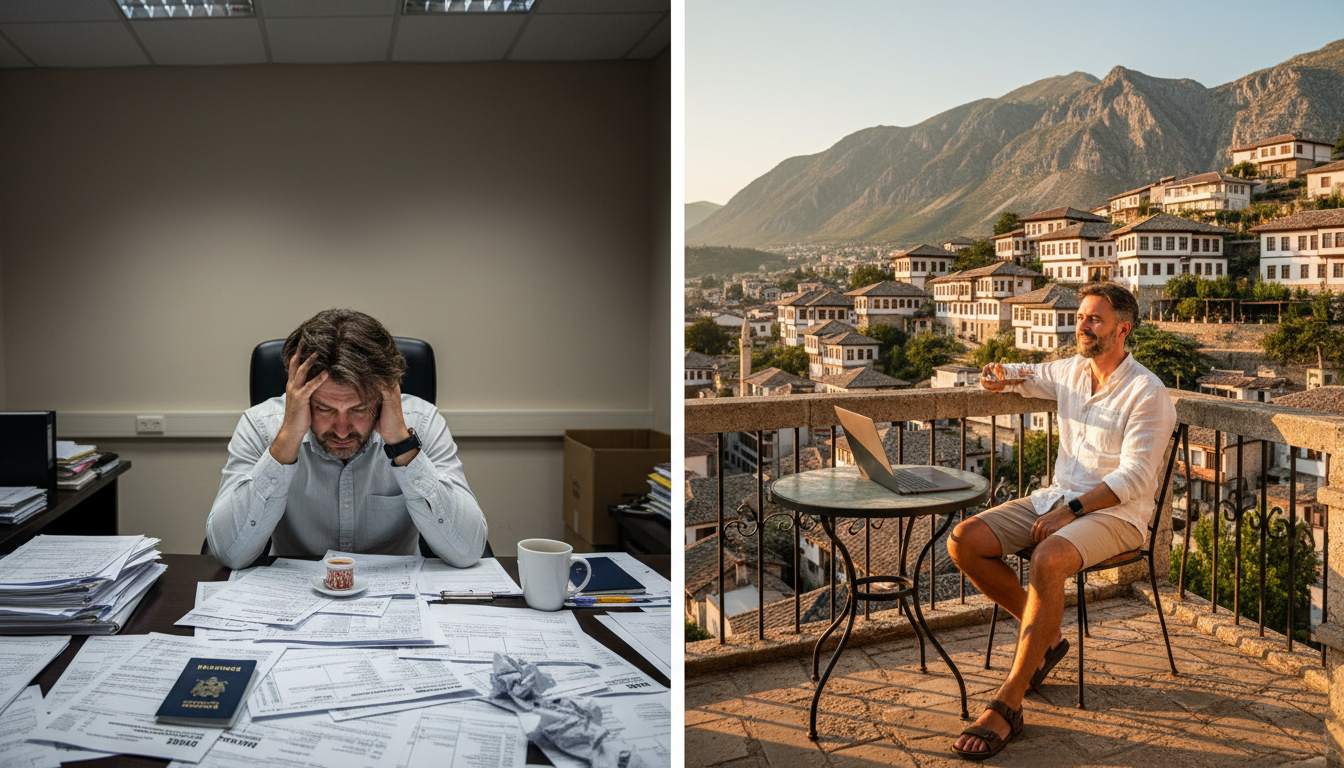
Pursuing US expats Albanian residency has rapidly transformed from a fringe idea into a mainstream strategy for Americans seeking relief from the high cost of living and the rat race of the West. Yet, as social media influencers flood feeds with videos of pristine beaches in Ksamil and coffee in Tirana for pennies, a critical question remains unanswered for the serious traveler: Is Albania a legitimate tax haven, or is it a bureaucratic trap for United States citizens?
Unlike moving to the EU Schengen zone, relocating to the Balkans offers a unique set of freedoms and frustrations. From the lack of a formal double taxation treaty to the undeniable allure of the Mediterranean lifestyle, here is everything the American passport holder must know.
The “Balkan Dream” vs. Reality
Albania has positioned itself as the “next Croatia” or “Europe’s last hidden gem.” For Americans, the appeal is obvious: a warm climate, incredibly hospitable locals, and a cost of living that makes a US Social Security check or a remote salary feel like a fortune. However, separating the Instagram aesthetic from the logistical reality is crucial.
While residency permits are generally easier to obtain here than in France or Italy, the infrastructure is still developing. You will face power outages, erratic driving conditions, and a banking system that can be notoriously slow for international transfers. Moving here requires patience and a shift in mindset.
The Residency Routes: How to Stay Legal
Americans enjoy a unique privilege in Albania: the “1-Year Stay Rule.” Unlike Schengen countries where you are limited to 90 days, US citizens can stay in Albania for up to one year without a visa. However, to stay longer or become a tax resident, you must apply for a residency permit.
1. The Retiree Visa
For pensioners, showing proof of a recurring pension (roughly $1,000/month or more) can secure a residency permit. This is one of the most straightforward paths for older Americans.
2. The Digital Nomad Visa (Unique Permit)
Albania recently introduced legislation to attract remote workers. This “Unique Permit” allows you to live in Albania while working for clients abroad. This is often the preferred route for younger expats.
If you are looking to explore other countries with similar programs, check out our comprehensive guide on digital nomad visa options across the globe.
The Tax Trap: What the IRS Wants You to Know
This is the section where the “Tax Haven” myth often crumbles for Americans. While Albania has low tax rates for small businesses (sometimes 0% for small turnover), your US citizenship follows you everywhere.
The Lack of a Tax Treaty
As of 2024, the United States and Albania do not have a comprehensive Double Taxation Avoidance Agreement regarding income tax. This is a significant hurdle. While you can utilize the Foreign Earned Income Exclusion (FEIE) or the Foreign Tax Credit on your US return to mitigate double taxation, the lack of a treaty means there are fewer protections for pensions and investments.
- Albanian Tax Residency: You become a tax resident if you stay more than 183 days.
- US Tax Obligations: You must still file with the IRS. If you pay 0% tax in Albania on your remote income, you may still owe federal taxes to the US unless you qualify for the FEIE.
- Social Security: Since there is no totalization agreement, you might find yourself paying into the Albanian social security system without it counting toward your US credits, and vice versa.
Cost of Living: The Real Financial Win
If the tax situation is complex, the cost of living is the undeniable win. For US expats Albanian residency is often justified simply by the arbitrage of living costs.
- Rent: A luxury 2-bedroom apartment in the capital, Tirana, can cost between $400 and $700 per month. In coastal cities like Vlorë or Sarandë, off-season prices drop significantly.
- Food: A meal at a high-end restaurant rarely exceeds $20 per person. Local produce is organic, abundant, and incredibly cheap.
- Healthcare: Private healthcare is affordable, though serious conditions may require medical evacuation to Italy or Greece. We highly recommend securing robust travel insurance that covers medical repatriation.
Is It Safe?
Contrary to outdated stereotypes from the 1990s, Albania is one of the safest countries in Europe for violent crime. Locals have a code of honor known as Besa, which dictates that a guest must be protected at all costs. Americans are generally treated with high regard.
The Verdict: Haven or Trap?
Albania is a Tax Haven for:
- Digital nomads earning under the FEIE limit (approx. $120k) who can legally structure their business to benefit from Albania’s low local taxes.
- Retirees whose pensions stretch 3x further than in the US.
Albania is a Trap for:
- Those expecting US-level efficiency in government services.
- Investors who assume a tax treaty protects their stock portfolios.
- Expats who fail to plan their exit strategy or healthcare coverage.
Final Thoughts on Mental Wellness Abroad
Moving across the Atlantic to a developing nation is an adventure, but it brings significant psychological stress. Dealing with language barriers, tax anxiety, and cultural adjustments can take a toll. For resources on maintaining your spiritual peace and mental wellness during your transition, visit Wazifa Hub.