
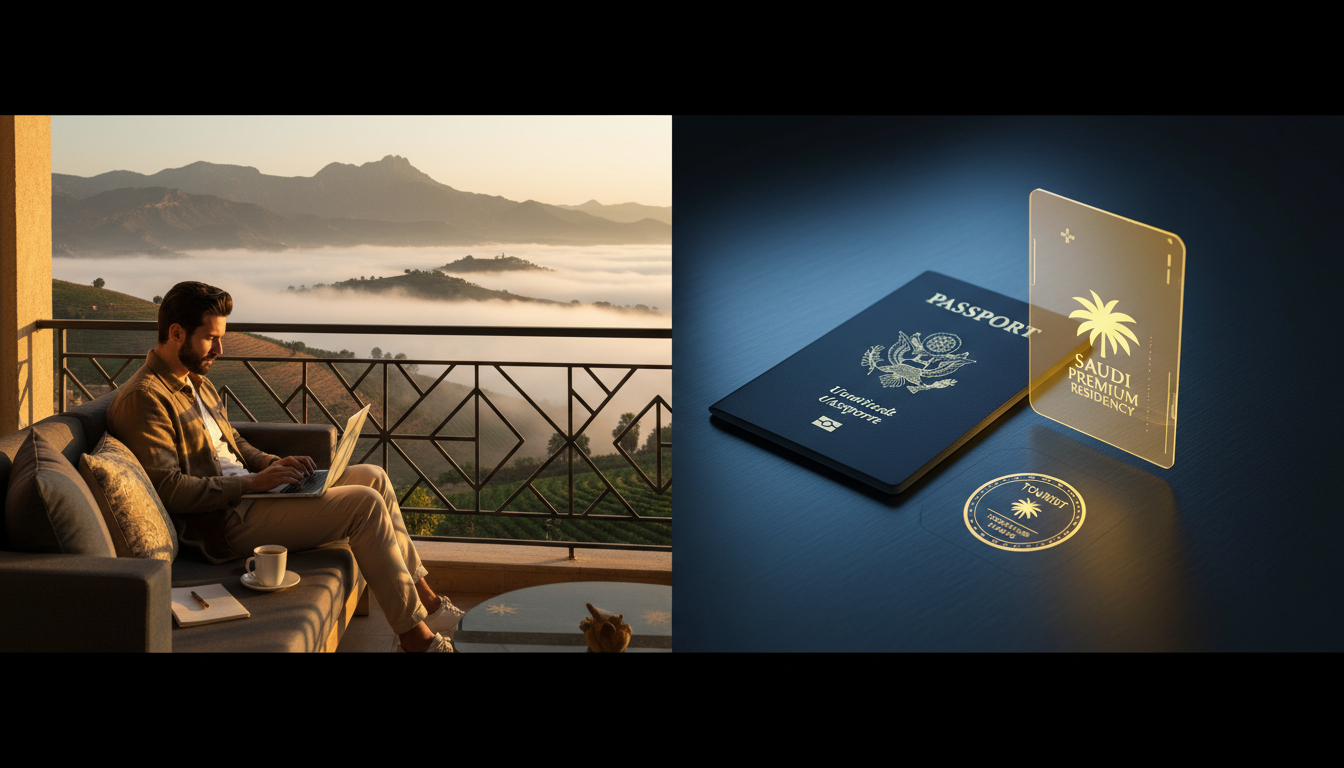
Planning Long Stays in Taif 2026 is becoming an increasingly attractive prospect for American travelers seeking a cooler, culturally rich alternative to the scorching desert heat of Riyadh or Jeddah. As Saudi Arabia accelerates toward its Vision 2030 goals, the “City of Roses” is transforming into a prime destination for digital nomads, retirees, and slow travelers. However, navigating the bureaucratic landscape can be tricky. Should you rely on the standard Tourist Visa, or is the investment in the Saudi Premium Residency worth the cost? This guide breaks down the best legal pathways for your extended stay in the Hijaz mountains.
Why Taif is the Jewel of Saudi Arabia for 2026
Unlike the coastal humidity of the Red Sea or the dry heat of the central Nejd, Taif offers a temperate climate that appeals significantly to US expats used to varied seasons. By 2026, major infrastructure projects connecting Taif to the mega-project NEOM and the Red Sea Project will be nearing maturity, making it a strategic hub.
For Americans looking for authentic Arabian culture without the extreme climate, Taif offers rose farms, historic souks, and hiking trails in the Al Hada mountains. But enjoying this lifestyle requires the right paperwork.
Option 1: The Saudi Tourist Visa (eVisa)
For most US citizens, the Saudi eVisa has been the gateway to the Kingdom since it opened its doors. It is convenient, fast, and relatively inexpensive, but it comes with limitations for those looking to truly settle down.
The Pros
- Ease of Access: US citizens can apply online and receive approval within minutes.
- Cost-Effective: The fees are significantly lower than residency permits, making it ideal for “trial runs” of living in the Kingdom.
- Multiple Entry: The standard visa usually allows for multiple entries over a one-year period.
The Cons for Long Stays
The biggest drawback is the duration of stay limit. Typically, the eVisa allows for a stay of up to 90 days continuously. While you can leave and re-enter (a “border run”), this can become exhausting and costly over time. Furthermore, you cannot open a local bank account, sign a long-term lease easily, or buy a car on a tourist visa.
Option 2: Saudi Premium Residency (The “Green Card”)
If you are serious about Long Stays in Taif 2026, the Premium Residency acts as a game-changer. Often compared to a “Green Card,” this status grants expats rights that were previously reserved only for Saudi nationals.
Types of Premium Residency
Saudi Arabia has expanded this program to include several categories relevant to US citizens:
- Special Talent Residency: For executives, healthcare professionals, and researchers.
- Gifted Residency: For artists and athletes.
- Investor Residency: For those looking to start business ventures in the Kingdom.
- Limited Duration Residency: A pay-as-you-go model tied to a specific number of years.
Benefits for Taif Residents
With Premium Residency, you can purchase property in Taif (in designated areas), allowing you to buy a mountain villa rather than renting. You can also sponsor family members, conduct business without a local sponsor (Kafeel), and switch jobs freely. This flexibility is crucial for digital nomads and entrepreneurs who want to utilize the digital nomad visa pathways effectively.
Cost of Living: Taif vs. The Major Cities
One of the main reasons Americans are eyeing Taif is the cost of living arbitrage. Renting a luxury apartment in Riyadh can cost upwards of $2,500 to $4,000 per month. In Taif, high-end accommodation with mountain views can often be secured for $800 to $1,500 per month.
Dining and entertainment in Taif remain more localized and affordable compared to the cosmopolitan inflation seen in Jeddah. For a long-term stay, these savings justify the upfront cost of a Premium Residency permit over a few years.
Accommodation Strategy for 2026
By 2026, the real estate market in Taif is expected to modernize further. We are seeing a shift from traditional heavy-curtained apartments to modern, open-concept lofts designed for international tastes.
Tourist Visa Renting: You are largely limited to Airbnb, Booking.com, or serviced apartments (aparthotels), which charge a premium daily or weekly rate.
Residency Renting: You can sign annual contracts (Ejari), significantly lowering your monthly expenditure. You also gain access to fiber-optic internet contracts in your own name, essential for remote work.
Verdict: Which is Right for You?
Choose the Tourist Visa if: You are a “Snowbird” escaping the US winter for 3 months or less, or if you plan to travel around the GCC region frequently and don’t mind not having a permanent local address.
Choose Premium Residency if: You want to make Taif your base for 6 months or more, wish to buy a car to explore the mountains, want to invest in property, or require the stability of a local bank account and long-term lease.
Regardless of which visa you choose, preparing your mind for a new culture is just as important as preparing your paperwork. For those seeking spiritual peace and mental wellness during their travels, many find resources like Wazifa Hub helpful for maintaining a grounded mindset while abroad.