
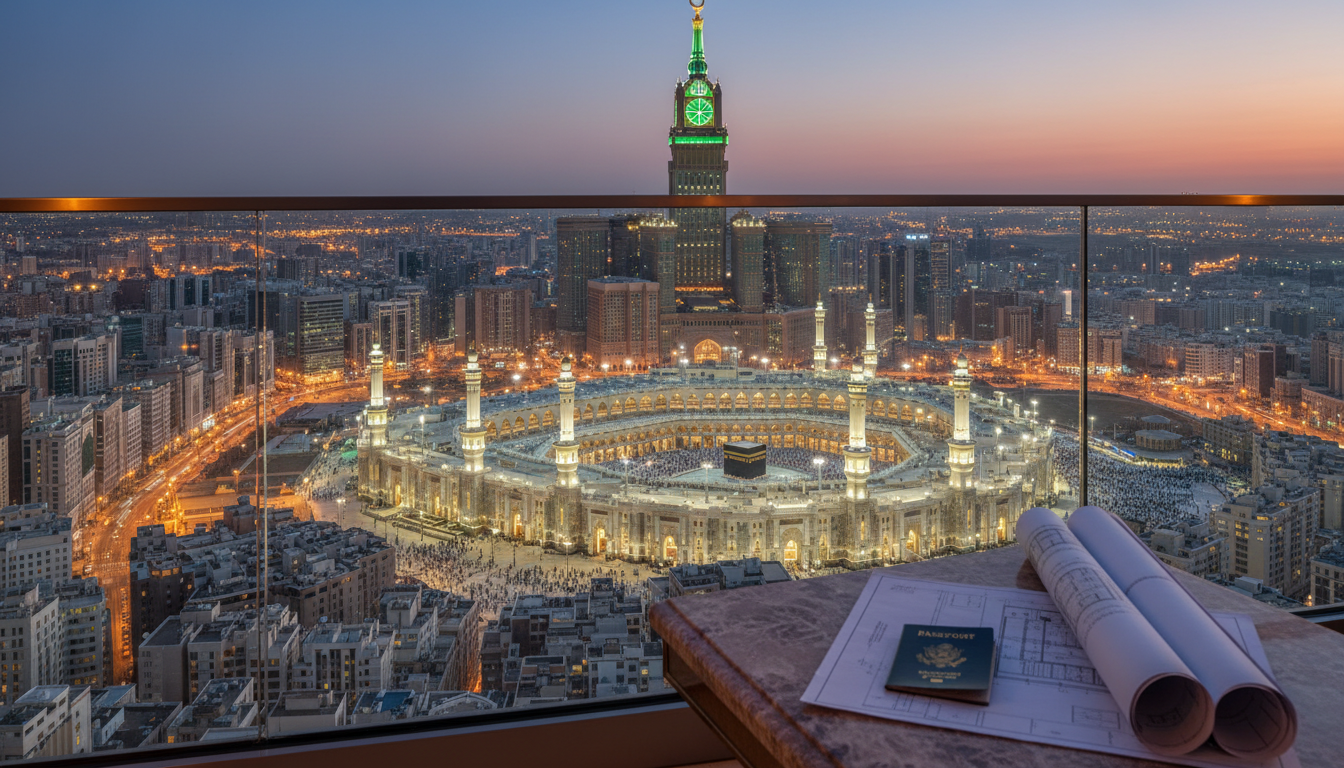
The Makkah real estate visa 2026 landscape is shifting rapidly, offering unprecedented opportunities for US investors seeking both spiritual connection and financial growth in the heart of the Islamic world. As Saudi Arabia accelerates its Vision 2030 initiatives, the Kingdom has liberalized property laws, creating a lucrative pathway for American citizens to secure residency through real estate investment. For decades, the Holy City was strictly off-limits for foreign ownership, but recent reforms regarding Premium Residency and usufruct rights have opened the gates to a new era of international investment.
The Evolution of Property Rights in the Holy City
Historically, non-Saudis were prohibited from owning real estate in Makkah and Madinah. However, the introduction of the Premium Residency (often called the “Saudi Green Card”) has revolutionized this sector. While direct freehold ownership remains restricted to Saudi citizens in specific zones, the new regulations allow qualifying foreign investors to acquire usufruct rights (long-term leaseholds) for up to 99 years.
For US investors, this is a game-changer. It provides a legal framework to hold assets in one of the world’s most high-demand real estate markets, backed by the stability of the Saudi Riyal, which is pegged to the US Dollar.
Investment Thresholds for US Investors in 2026
Understanding the financial entry points is crucial. The Saudi government has tiered the residency options based on the volume of investment. As we look toward 2026, these thresholds are designed to attract high-net-worth individuals.
1. Limited Duration Residency (SP2)
This option is popular for investors who want flexibility without a massive upfront capital commitment.
- Annual Fee: Approximately SAR 100,000 (approx. $26,600 USD).
- Real Estate Requirement: While not strictly tied to a property purchase threshold, holding this residency allows you to acquire residential usufruct rights in Makkah.
- Validity: Renewable annually.
2. Permanent Premium Residency (SP1)
This is the “Gold Standard” for serious investors looking for lifetime benefits.
- One-time Fee: SAR 800,000 (approx. $213,000 USD).
- Real Estate Owner Residency: A specific sub-category introduced recently requires owning real estate assets worth a minimum of SAR 4,000,000 (approx. $1.07 million USD).
- Benefits: The property must be free of mortgages. This track grants permanent residency for you and your family, along with the right to conduct business and invest in the Saudi stock market (Tadawul).
Why Makkah? The ROI Perspective
Makkah is unlike any other real estate market on earth. It is not driven by typical tourism cycles but by an eternal spiritual demand. With millions of pilgrims visiting annually for Hajj and Umrah, the demand for accommodation near the Grand Mosque (Masjid al-Haram) is perpetual.
For US investors, this offers a hedge against inflation. High-end residential units in towers like the Abraj Al Bait or new developments in the Masar Destination offer substantial rental yields. If you are interested in combining investment with lifestyle, you might want to explore our guide on luxury travel experiences to understand the caliber of amenities now available in the Kingdom.
Strategic Locations for Investment
- Jabal Omar: Within walking distance of the Haram, offering premium luxury apartments.
- Masar Destination: A modern urban development connecting the Haramain Train Station to the Grand Mosque.
- Thakher City: A massive project transforming the topography of Makkah with modern infrastructure.
Navigating the Legal Landscape
The process for obtaining a Makkah real estate visa 2026 involves several steps handled through the Premium Residency Center (PRC). US citizens must ensure:
- Clean Criminal Record: A standard requirement for all applicants.
- Proof of Financial Solvency: Bank statements proving the ability to invest the required SAR 4 million (for the property owner track).
- Certified Health Report: Confirming the applicant is free from contagious diseases.
Once the residency is granted, the investor can proceed to purchase the usufruct rights. It is highly recommended to use a verified real estate agent and a legal consultant specializing in Saudi property law to navigate the nuances of the “Intifa” contracts.
The Spiritual and Emotional Dividend
Beyond the financial metrics, owning a home in Makkah offers an intangible return on investment: spiritual proximity. For Muslim Americans, the ability to reside near the Kaaba, perform daily prayers in the Haram, and have a permanent base for Umrah is priceless.
However, the stress of international investment and legal navigation can be taxing. It is vital to maintain a balanced state of mind throughout this process. For those seeking spiritual grounding and mental clarity during their investment journey, visiting Wazifa Hub can provide resources for spiritual peace and mental wellness.