
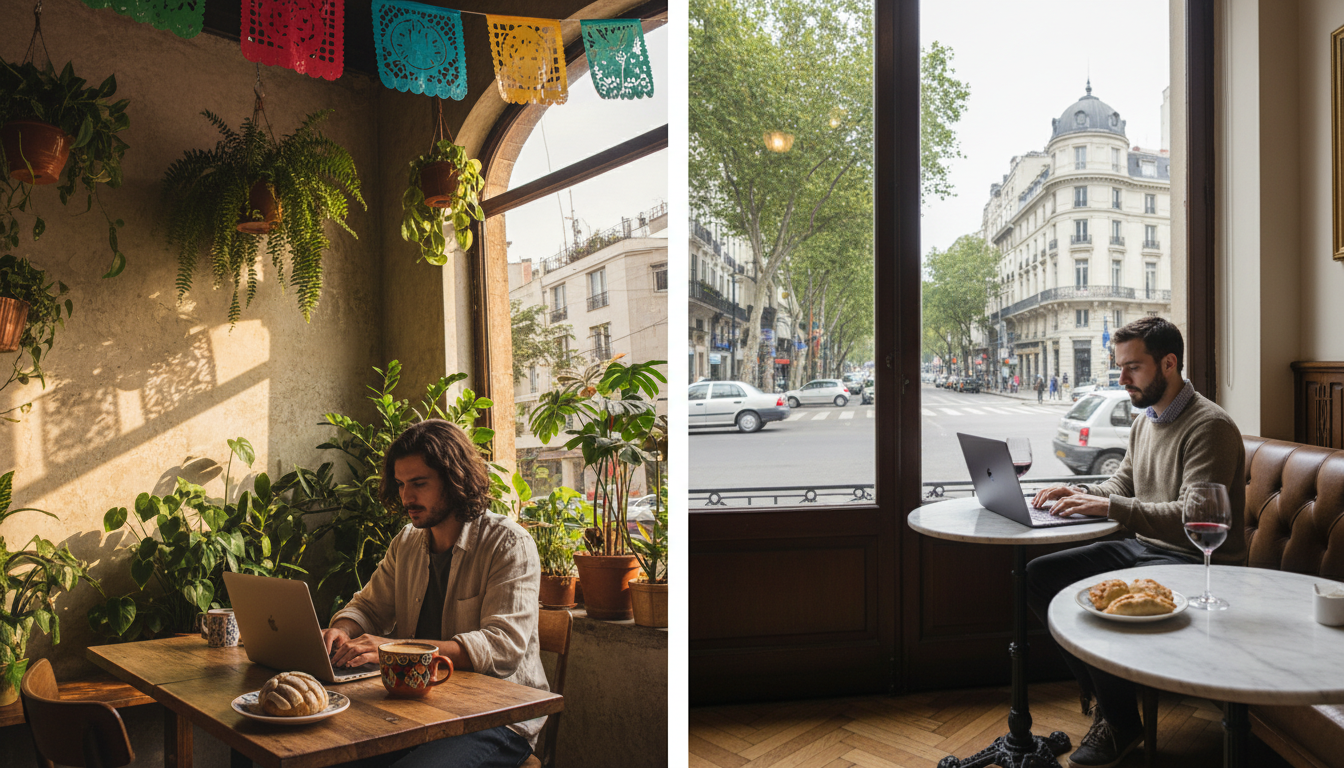
Choosing between the Argentina vs Mexico digital nomad visa 2026 is arguably the most significant dilemma facing American remote workers looking to relocate south of the border this year. As the remote work landscape matures, both nations have solidified their positions as top-tier destinations, yet they offer vastly different experiences, financial requirements, and bureaucratic hurdles. While Mexico offers proximity and stability, Argentina counters with European flair and unbeatable value. In this comprehensive guide, we dissect the nuances of both visa programs to help you decide where to set up your laptop next.
The Great Latin American Debate: Stability vs. Value
For years, Mexico was the default choice for Americans. It is close, flight connections are plentiful, and the time zones align perfectly with US business hours. However, Argentina has surged in popularity, driven by a specific digital nomad visa introduced to capitalize on the “Blue Dollar” exchange rate phenomenon. As we look toward 2026, the choice isn’t just about tacos versus steak; it is about long-term financial strategy and lifestyle preferences.
When analyzing the Argentina vs Mexico digital nomad visa 2026 landscape, one must look beyond the brochures. We need to talk about income thresholds, tax residency traps, and the reality of dealing with local immigration offices.
Mexico: The Established Giant (Temporary Resident Visa)
Mexico does not strictly have a “Digital Nomad Visa” by name in the same way some European countries do. Instead, remote workers utilize the Temporary Resident Visa based on economic solvency. This pathway is well-trodden, reliable, and leads to permanent residency if desired.
Income Requirements and Financials
As we move into 2026, Mexico has continued to adjust its economic solvency requirements upward to account for inflation. Generally, you must prove:
- Monthly Income: Approximately $3,200 – $4,500 USD per month (net) over the last 6 months.
- Savings Balance: Alternatively, a savings balance of roughly $54,000 – $75,000 USD maintained over the last 12 months.
Note: These figures fluctuate based on the Mexican Minimum Wage (UMA), which rises annually.
The Pros of Choosing Mexico
- Proximity: You can fly back to the USA for a weekend easily.
- Infrastructure: Mexico City, Guadalajara, and Playa del Carmen have world-class internet and coworking spaces.
- Path to Citizenship: Unlike many nomad visas, this visa counts toward permanent residency and eventual citizenship.
Argentina: The South American Contender
Argentina introduced its specific Digital Nomad Visa to attract foreign currency. While the economy has been volatile, this volatility often works in favor of the American remote worker holding USD.
Income Requirements and Financials
Argentina’s entry barrier is significantly lower than Mexico’s, making it attractive for early-career freelancers.
- Monthly Income: Historically set around roughly $2,500 USD equivalent, though enforcement varies by consulate.
- Visa Duration: Valid for 180 days, renewable once. It is less of a long-term residency solution compared to Mexico’s 1-4 year options.
The “Blue Dollar” Factor
The most compelling argument for Argentina is the cost of living. By utilizing Western Union or crypto exchanges, Americans can access the “Blue Dollar” rate (the parallel exchange rate), effectively doubling their purchasing power compared to the official bank rate. A luxury lifestyle in Buenos Aires can cost a fraction of what a modest lifestyle costs in Mexico City.
Head-to-Head: Argentina vs Mexico Digital Nomad Visa 2026
Let’s break down the comparison into key categories relevant to the American expat.
1. Taxation
Mexico: If you spend more than 183 days in Mexico, you are technically a tax resident. However, enforcement on foreign-sourced income for Temporary Residents varies. Many nomads utilize the “territorial” interpretation, but you should consult a CPA.
Argentina: The digital nomad visa explicitly exempts holders from paying local income tax on foreign earnings, a massive advantage for high earners.
2. Internet and Infrastructure
Mexico: Generally superior. Fiber optic is standard in major cities. Starlink is widely available.
Argentina: Buenos Aires is excellent, but infrastructure in Patagonia or smaller wine regions (like Mendoza) can be spotty. Power outages in summer are not uncommon in Buenos Aires.
3. Time Zones
Mexico: Aligns with CST/EST/MST/PST depending on the state. Perfect for synchronous work.
Argentina: Usually 1 to 2 hours ahead of EST. This is manageable, but if you work with clients in California (PST), your evenings will be consumed by work.
Lifestyle: Tacos vs. Asado
The cultural vibration differs immensely. Mexico is vibrant, loud, colorful, and deeply North American in its modern conveniences. You will find Walmart, Costco, and familiar brands everywhere.
Argentina feels distinctly European. Buenos Aires is often called the “Paris of South America.” The architecture is Beaux-Arts, the dinner time is 10:00 PM, and the pace is slower. The food scene focuses heavily on beef (Asado), wine (Malbec), and Italian influences (pasta/pizza).
Safety Considerations
In 2026, safety remains a primary concern for US travelers. Mexico has pockets of high cartel violence, though nomad bubbles (CDMX, Merida, Puerto Vallarta) are generally safe. Argentina deals more with petty crime (phone snatching) rather than violent organized crime, though economic desperation can lead to an increase in muggings.
Which Visa is Right for You?
Ultimately, the winner of the Argentina vs Mexico digital nomad visa 2026 battle depends on your goals.
Choose Mexico if:
- You want a path to permanent residency or citizenship.
- You need to be in the same time zone as US clients.
- You prefer a warmer, tropical climate (beaches).
- You meet the higher solvency requirements ($3k-$4k+/mo).
Choose Argentina if:
- You want to maximize your budget (geo-arbitrage).
- You prefer a European city vibe and cooler seasons.
- You are looking for a short-term adventure (6-12 months) rather than permanent migration.
- You love steak, wine, and hiking in the Andes.
Final Thoughts
Both countries offer incredible hospitality and a break from the high cost of living in the United States. Mexico is the safe, long-term bet for integration. Argentina is the exciting, high-value wildcard for those willing to navigate a bit of economic chaos for a world-class lifestyle.
Relocating to a new country can be stressful. Beyond the logistics of visas and taxes, maintaining your inner balance is crucial during such a major life transition. For resources on maintaining your spiritual peace and mental wellness during your travels, visit Wazifa Hub.