
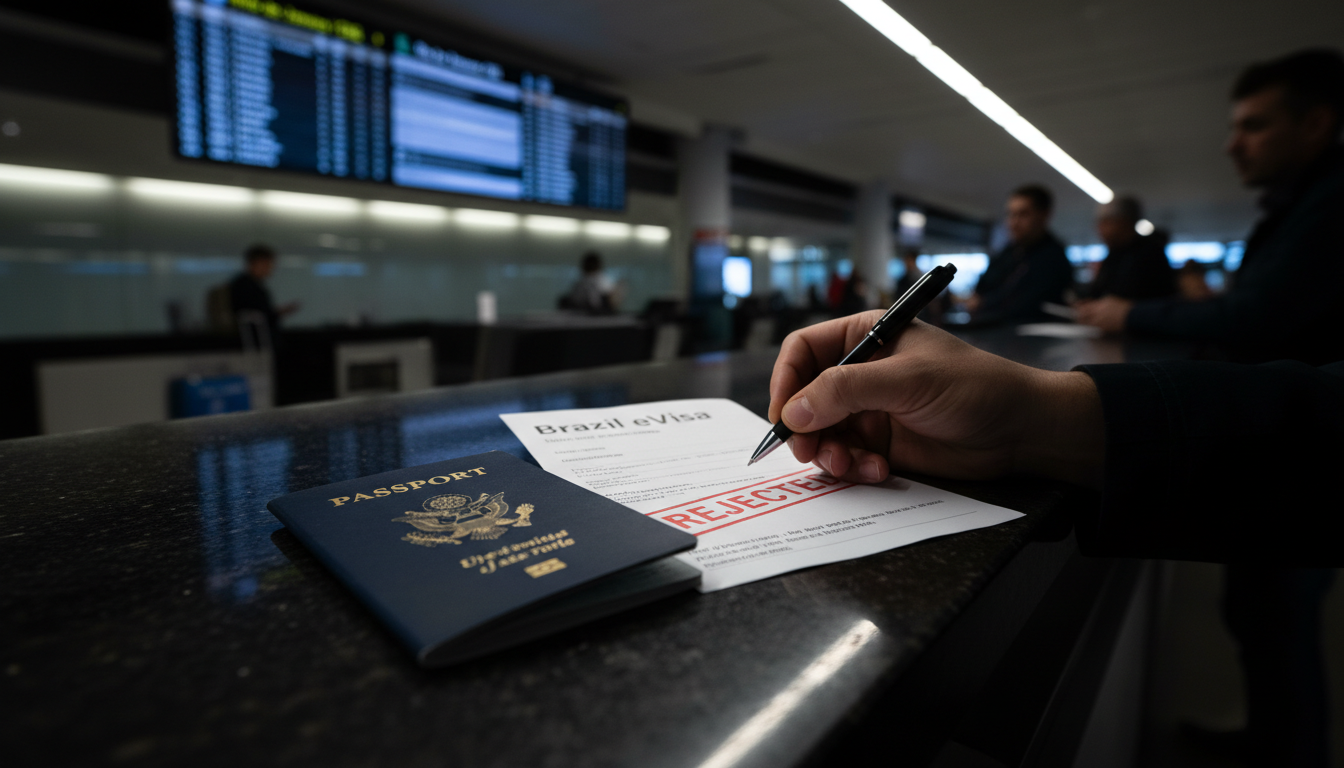
Avoiding the common Brazil visa mistakes US citizens make is absolutely essential now that the reciprocal visa policy is fully enforced for the 2026 travel season. For years, Americans enjoyed visa-free access to the land of Samba and sunshine, but with the reinstatement of the eVisa requirement, compliancy is no longer optional—it is the difference between sipping caipirinhas in Rio and being denied boarding at JFK.
The bureaucratic landscape of Brazilian immigration (Itamaraty) can be tricky. While the electronic visa (eVisa) system is designed to be streamlined, it is notoriously strict regarding document specifications. A simple typo or a blurry upload can lead to immediate rejection, lost fees, and ruined itineraries. As a senior travel journalist, I have interviewed dozens of travelers who learned these lessons the hard way.
Below, we break down the seven most critical errors Americans make when applying for a Brazilian visa and provide a roadmap to ensure your passport gets that approval stamp without a hitch.
1. Underestimating the Processing Time (The “Last Minute” Trap)
Perhaps the most fatal of all Brazil visa mistakes US citizens commit is procrastination. In the era of instant digital gratification, many assume an “eVisa” means “instant visa.” This is factually incorrect regarding Brazil.
While the official timeline often states 5 business days, real-world processing in 2026 can take anywhere from 7 to 15 business days depending on volume. During peak travel seasons (Carnival in February or New Year’s Eve in Copacabana), the system gets clogged. If you apply 72 hours before your flight, you are gambling with your vacation.
2. The Infamous “Selfie” Photo Upload
Brazil’s online portal uses automated biometric scanning. The number one reason for immediate rejection is a non-compliant photograph. Many travelers treat the photo upload like a social media profile picture. This is a government document, and the standards are rigid.
Common Photo Failures:
- Background Noise: Using a white wall that isn’t purely white or has shadows.
- Glasses: Even if you wear them daily, remove them. Glare on lenses triggers auto-rejection.
- Shoulders: Cropping the photo too close to the face. The upload must show your full head and the top of your shoulders.
- Selfies: Holding the camera yourself usually distorts the angle of the face.
3. Ignoring the “Bank Statement” Requirement
Unlike the old days of visa-free travel, Brazil now requires proof of financial solvency. This surprises many Americans who are used to traveling without disclosing finances. You generally need to show proof of at least $2,000 USD (or credit card limits) to prove you can support yourself.
The mistake here is uploading a screenshot of a banking app that doesn’t show your name. You must upload a formal monthly statement (PDF) that clearly displays:
- Your full legal name (matching the passport).
- The current date (must be recent).
- The available balance.
If you are worried about privacy, you can redact the account number, but the name and balance must be visible.
4. Mismatched Dates on the Itinerary
When you fill out the application form, you will be asked for your intended dates of arrival and departure. You will also be asked to upload flight reservations. A frequent error is a discrepancy between the dates entered in the text fields and the dates on the uploaded flight PDF.
Even a one-day difference (often caused by overnight flights landing the next day) can flag your application for manual review, slowing down the process significantly. Ensure your entry date matches the “Arrival” date on your ticket, not your “Departure” date from the US.
5. The “6-Month Rule” Oversight
This is a standard international travel rule, yet it remains one of the top Brazil visa mistakes US citizens overlook. Your passport must have at least six months of validity remaining from the date of entry into Brazil.
If your passport expires within four months of your trip, the eVisa system might let you apply, but the airline check-in desk will deny you boarding. Furthermore, you need at least two blank visa pages. While the eVisa is digital, border agents often still stamp passports upon entry and exit.
6. Failing to Print the Document
Everything is digital until the internet goes down. While your visa is technically linked to your passport number in the Brazilian immigration system, airline systems are not always synced perfectly.
Many travelers arrive at the airport with only a screenshot on their phone. If your phone battery dies, or if the airline agent demands a paper copy (which they often do for liability reasons), you are stuck. Always print two physical copies of your approved eVisa PDF. Keep one in your carry-on and one in your checked luggage.
7. Overlooking Minor Children Requirements
Brazil takes child trafficking prevention very seriously. If you are traveling with a minor, the documentation requirements are stricter. A common mistake is assuming the child just needs a passport and visa.
If a child is traveling with only one parent, Brazil often requires a notarized consent form from the non-traveling parent. Furthermore, when applying for the child’s visa, you must upload the birth certificate in addition to the passport. Failing to provide the birth certificate during the eVisa application is a guaranteed rejection for minors.
Conclusion: Preparation is Key
Brazil remains one of the most spectacular destinations on Earth, from the Amazon rainforest to the urban jungle of São Paulo. The reinstatement of the visa requirement for US citizens is a diplomatic hurdle, but not an insurmountable one. By avoiding these critical errors—specifically regarding photo quality, financial proof, and timing—you ensure your trip starts with excitement rather than administrative stress.
Travel is about exploring the world with an open heart and a clear mind. Don’t let bureaucracy cloud your experience. For those seeking to maintain spiritual peace and mental wellness during stressful travel planning, taking a moment to breathe and organize is the best strategy.