
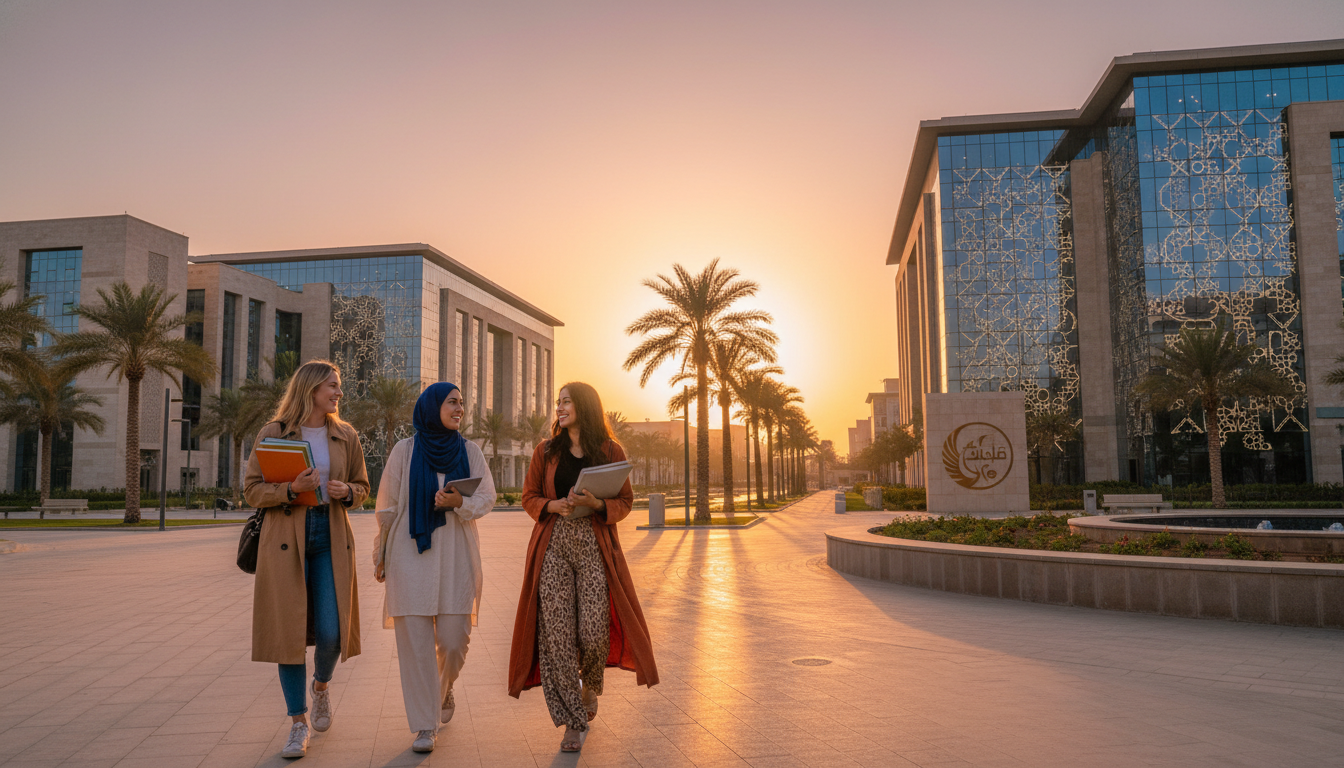
For American applicants considering a bold academic move, the reality of life for female students in Saudi Arabia has shifted dramatically under the Kingdom’s massive Vision 2030 transformation. Gone are the days of restrictive guardianship laws and mandatory abayas for foreigners; today, the Kingdom is aggressively recruiting international talent with fully funded scholarships and state-of-the-art research facilities. However, misconceptions persist in the West. This guide peels back the layers to reveal what life is really like for women studying in the Kingdom in 2026.
The Vision 2030 Effect: A New Era for Education
Saudi Arabia is no longer the closed-off society it was a decade ago. Under Crown Prince Mohammed bin Salman’s Vision 2030, the education sector has undergone a massive overhaul. For female students in Saudi Arabia, this means integrated campuses, the freedom to drive, and the ability to travel without a male guardian (mahram). Universities like KAUST (King Abdullah University of Science and Technology) and Princess Nourah Bint Abdulrahman University (the world’s largest women’s university) are at the forefront of this change, offering world-class labs that rival Ivy League institutions.
The Truth About Safety for Women in 2026
Safety is often the primary concern for parents of students heading to the Middle East. Surprisingly to many Americans, Saudi Arabia ranks as one of the safest G20 nations regarding violent crime. Street harassment is strictly penalized under public decency laws.
However, cultural safety involves understanding the nuances of conservative society:
- Dress Code: While the mandatory headscarf and abaya are no longer required for foreign women by law, modest dress (covering shoulders and knees) is expected in public spaces. On campus, the vibe is significantly more relaxed and Westernized, especially at mixed universities like KAUST.
- Social Interactions: Gender segregation is fading in public spaces like cafes and cinemas, but it remains a part of traditional social fabric. As a student, you will navigate a hybrid world—modern on campus, traditional in the souqs.
- Travel: Women can rent cars, book hotels, and travel solo across the Kingdom safely. Uber and Careem are reliable and widely used.
Navigating the Saudi Student Visa Process
Getting a student visa for Saudi Arabia requires patience, but the process has been streamlined for US citizens.
Key Requirements for 2026:
- University Acceptance Letter: You cannot apply for a visa without a confirmed offer.
- Medical Report: A comprehensive medical exam verifying you are free of contagious diseases.
- Police Clearance: A background check from your local US police department or FBI.
- Attestation: All academic documents must be attested by the Saudi Cultural Mission in the USA.
Campus Life and Accommodation
Life inside the university “compound” is often described as a bubble of luxury. Universities provide on-campus housing that often resembles high-end apartment complexes rather than dorms.
Top Universities for International Females:
- KAUST (Thuwal): A mixed-gender, graduate-level university. It is essentially a Western enclave with its own beaches, golf courses, and no dress code within the campus gates.
- Princess Nourah University (Riyadh): An all-female environment that empowers women with leadership roles, featuring a massive metro system inside the campus.
- King Saud University (Riyadh): Offers strong programs in medicine and humanities with a growing international community.
Financial Perks: Why Study Here?
One of the biggest draws for female students in Saudi Arabia is the financial package. Unlike the US, where student debt is crippling, Saudi public universities often offer:
- Full tuition waivers.
- Monthly stipends (living allowance).
- Subsidized meals and free accommodation.
- Annual round-trip airfare to your home country.
Mental Wellness and Cultural Adjustment
Moving to the Middle East is a significant adjustment. The call to prayer five times a day, the desert heat, and the language barrier can lead to culture shock. It is vital to build a support network early. Connect with expat groups in Riyadh or Jeddah and engage in campus clubs.
For those seeking spiritual peace or mental wellness tips during their academic journey abroad, you can find valuable resources at Wazifa Hub.