
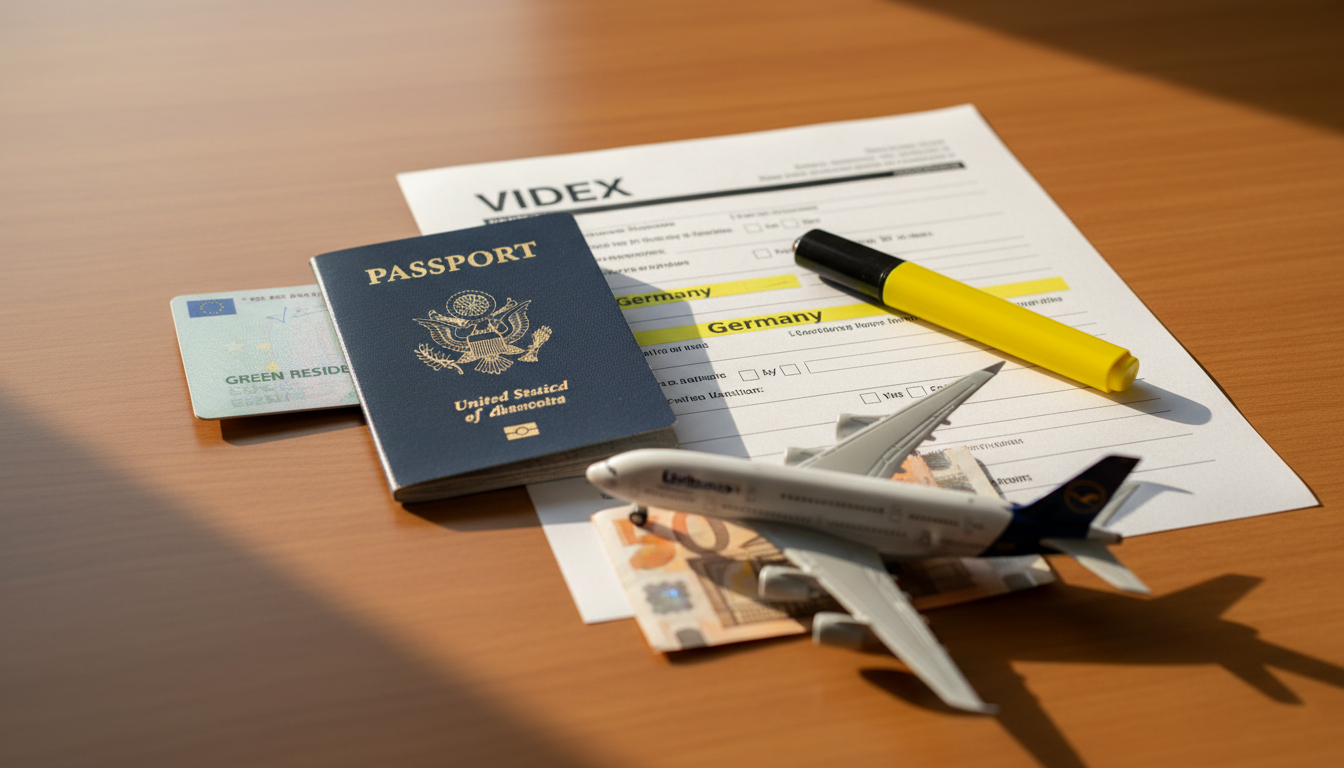
Securing a Germany Schengen Visa from USA is the critical first step for non-US citizens residing in the States who dream of exploring the romantic Rhine, the Bavarian Alps, or the bustling streets of Berlin. As we move into 2026, the process has evolved, with stricter documentation checks and new outsourcing partners handling the logistics. Whether you hold a Green Card or a rigorous work visa (H1B), navigating the German bureaucratic landscape requires precision, patience, and the right roadmap. This guide serves as your essential manual to unlocking the gates of Europe.
Who Needs a Schengen Visa from the USA?
First, let’s clear up a common misconception. If you hold a United States passport, you generally do not need a visa for short stays (up to 90 days) in Germany for tourism or business, though you may soon need an ETIAS authorization. However, the Germany Schengen Visa from USA is mandatory for:
- US Permanent Residents (Green Card holders) with passports from countries that do not have a visa-waiver agreement with the EU (e.g., India, China, Russia, Philippines).
- Holders of long-term US visas (H1B, F1, L1) with passports from non-visa-waiver countries.
- Travelers planning to stay in the Schengen zone for up to 90 days within a 180-day period.
Step 1: Determine Your Jurisdiction and Application Center
Germany has outsourced much of its visa intake process in the United States to BLS International. You cannot simply walk into the German Embassy in Washington D.C. anymore. You must apply at the center that serves your state of residence.
Major jurisdictions include:
- New York: Serving NY, NJ, PA, and surrounding states.
- Los Angeles: Serving Southern California, AZ, NV, etc.
- San Francisco: Serving Northern California, WA, OR, etc.
- Chicago, Miami, Houston: Covering the Midwest and South.
Applying at the wrong jurisdiction is the number one reason for immediate dismissal without review.
Step 2: The “Golden Stack” of Documents
German consulates are famous for their attention to detail. Missing one document can result in a rejection. Prepare the following “Golden Stack” before you even book an appointment:
1. Valid Passport
Your passport must have been issued within the last 10 years, have at least two blank pages, and be valid for at least three months after you plan to leave the Schengen area.
2. Proof of US Residence
You must prove you have ties to the USA and will return. This includes your Green Card (original and copy) or a valid US Visa (H1B, F1) attached to your passport along with the I-797 approval notice or I-20 form.
3. The Application Form (Videx)
Germany uses an online platform called Videx. You must fill this out digitally, print it, and sign it. Handwriting the form is no longer accepted.
4. Travel Insurance
This is non-negotiable. You need medical insurance covering the entire Schengen zone with a minimum coverage of €30,000 (approx. $33,000 USD). It must cover medical emergencies and repatriation.
For detailed comparisons on the best policies that meet EU standards, check our guide on comprehensive travel insurance options.
5. Proof of Accommodation and Itinerary
You do not need to buy a flight ticket, but you need a reserved flight itinerary. For accommodation, confirmed hotel bookings for every night of your stay are required. If staying with friends, you need a formal obligation letter (Verpflichtungserklärung) obtained by your host in Germany.
6. Financial Sustenance
You must prove you can afford the trip. Provide:
- Last 3 months of bank statements (stamped by the bank is preferred).
- Last 3 months of pay stubs.
- Employment verification letter stating your role, salary, and approved leave dates.
Step 3: Booking the Appointment (The Hardest Part)
Booking a slot with BLS International or the consulate can be a nightmare due to high demand. Appointments are often released in batches.
- Check Daily: Slots often open up at midnight or early morning local time.
- Premium Lounge: If you are struggling to find a standard slot, BLS often offers “Premium Lounge” services for an extra fee. While expensive, it often guarantees an earlier appointment time and a more comfortable submission process.
Step 4: The Interview and Biometrics
On the day of your appointment, arrive 15 minutes early. Dress smartly—treat it like a job interview. You will submit your documents, pay the visa fee (approx. €80-€90 USD, subject to exchange rates), and provide biometric data (fingerprints and photo).
Common Interview Questions:
- “What is the purpose of your visit?” (Be concise: Tourism/Business).
- “How long have you lived in the USA?”
- “Do you have family in Europe?”
- “What do you do for work?”
Processing Time and Passport Collection
In 2026, the standard processing time is 15 calendar days. However, during peak travel seasons (Summer and Christmas), this can extend to 30 or even 45 days. We strongly recommend applying at least 2 months before your intended travel date.
Once approved, your passport will have the visa sticker affixed. Check the dates and spelling immediately. If there is an error, report it to the consulate instantly before leaving the center.
Conclusion: Prepare for the Rhine
Getting a Germany Schengen Visa from the USA requires meticulous preparation, but the reward is access to the heart of Europe. By following this roadmap, organizing your paperwork, and securing the right insurance, you minimize the risk of rejection and maximize your chances of a stamp in your passport.
The visa process can be stressful and anxiety-inducing. If you are feeling overwhelmed and need to find spiritual grounding or mental peace during this waiting period, consider visiting Wazifa Hub for resources on mental wellness and spiritual tranquility.