
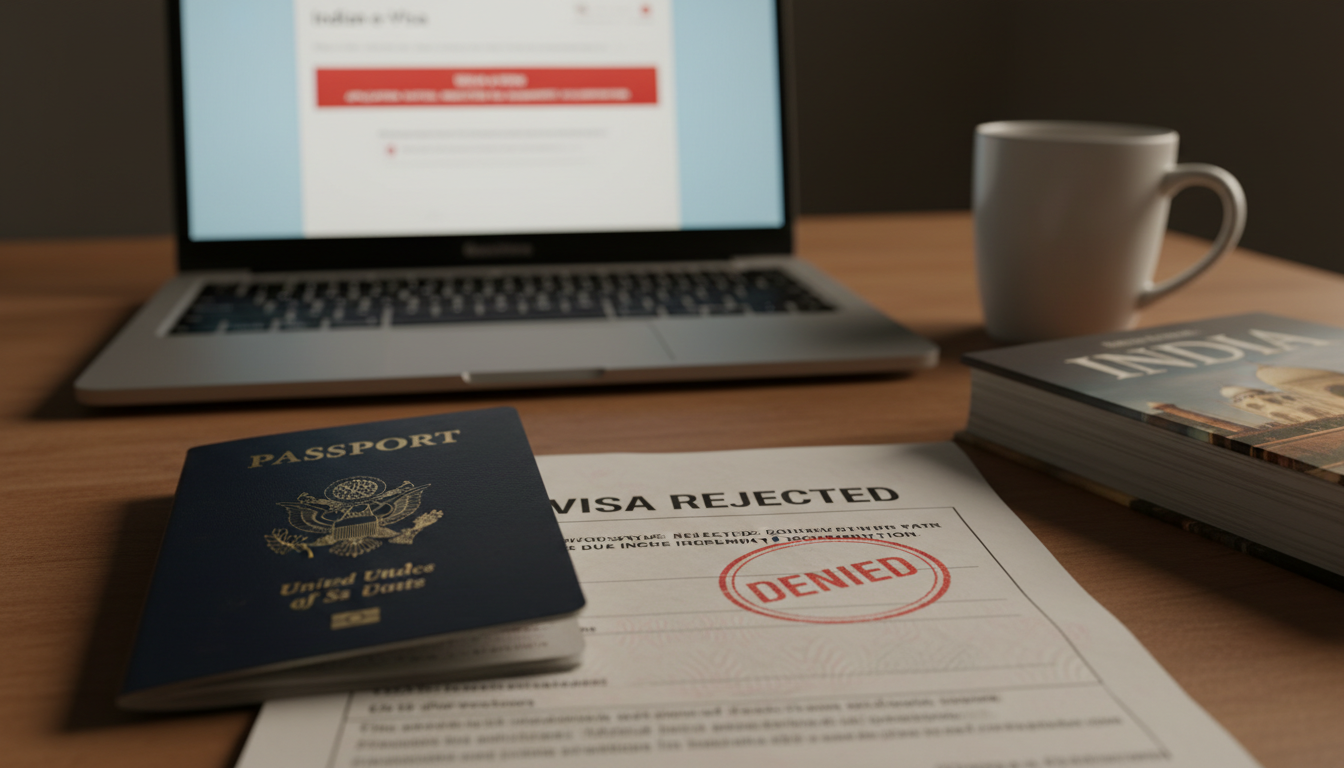
Understanding the most common India visa rejection reasons is the absolute first step for any US citizen planning a journey to the vibrant subcontinent to avoid the heartbreak of a cancelled trip. While the Indian e-visa system has streamlined travel for millions of Americans, the automated nature of the process means that even a minor clerical error can result in an immediate “Granted” status turning into a “Rejected” nightmare.
India is a dream destination, offering everything from the snow-capped Himalayas to the tropical backwaters of Kerala. However, the bureaucratic gateway can be strict. In this comprehensive guide, we will dissect why US applications fail and provide you with a roadmap to ensure your visa is approved on the first try.
The Reality of Indian E-Visa Rejections
Many US travelers operate under the misconception that an e-visa is merely a formality. Unlike a visa-on-arrival where a human officer might overlook a typo, the Indian e-visa system is rigid. Computer algorithms and strict processing officers scrutinize every pixel of your uploaded documents. If your application does not align perfectly with the Ministry of Home Affairs’ requirements, rejection is highly likely.
A rejection doesn’t just mean a delay; it often requires a completely new application and payment of fees again. Let’s look at the specific hurdles that trip up American applicants.
Top 7 Common Reasons for Rejection
1. The Dreaded Photo and Document Clarity Issues
This is, without a doubt, the number one cause for denial. The Indian government has very specific requirements for the applicant’s photograph and passport scan.
- The Photo: Must be a square image (2×2 inches), clearly showing the full face against a plain white background. Selfies, photos with shadows behind the ears, or images where you are wearing glasses (especially with glare) are instantly rejected.
- The Passport Scan: The PDF upload of your passport bio page must be clear. If the MRZ code (the two lines of text at the bottom) is cut off, blurry, or has a flash glare covering the numbers, the system cannot read it, leading to rejection.
2. Incorrect Passport Details
Typos are fatal to your application. Common mistakes include entering the letter ‘O’ instead of the number ‘0’ in the passport number, or misspelling a middle name. The data you enter in the form must match the data on your passport bio page exactly. Even a discrepancy in the place of birth (e.g., putting “USA” instead of the specific state if the passport lists the state) can trigger a red flag.
3. “Validity” Violations
Your US passport must be valid for at least six months beyond your date of arrival in India. If your passport expires in four months, your visa will be rejected regardless of your itinerary. Additionally, you must have at least two blank pages for the immigration officer to stamp upon arrival.
4. Reference Errors in India
The application asks for a “Reference Name in India.” Many US travelers, unsure of where they are staying, leave this blank or put “None.” This is a major mistake. You must provide the name, address, and phone number of a hotel or a tour operator. If you are staying with friends, their details are required. The authorities verify these addresses to ensure you have a legitimate place to stay.
5. Criminal History Discrepancies
The application includes a checkbox asking if you have ever been arrested or convicted. If you have a record and check “No,” and background checks reveal otherwise, you will be rejected for misrepresentation. Conversely, minor traffic violations generally do not need to be declared, but confusion here often leads to anxiety and errors. Honesty is paramount, but understanding what constitutes a reportable offense is equally important.
6. Mismatched Purpose of Visit
Applying for a Tourist e-Visa when your actual intent is business (meetings, conferences) or journalism is a fast track to rejection. India offers specific visa categories for Business, Medical, and Conference travel. If your stated occupation is “Journalist” or “Media Professional,” a standard tourist visa is often flagged for deeper scrutiny or rejection, as media professionals usually require a specific J-Visa.
7. Previous Visa Violations
Have you ever overstayed a visa in India or been deported? This history is recorded. Applying for a new e-visa without addressing previous overstays or paying necessary penalties will result in an automatic denial.
How to Fix and Reapply After a Rejection
If you receive a rejection email, do not panic. The notification rarely explains why you were rejected, stating only “Rejected.” Review your submitted application against the list above.
- Wait 24-48 Hours: Sometimes the system needs time to clear your status.
- Correct the Error: If the photo was the issue, retake it. If it was a typo, correct it.
- New Application: You cannot “edit” a rejected application. You must start a fresh application and pay the fee again.
- Consult the Consulate: If you are rejected multiple times, stop applying online. Visit the nearest Indian Consulate or Embassy in the US (New York, San Francisco, Chicago, Houston, Atlanta, or D.C.) for a regular paper visa.
Protecting Your Trip Investment
Visa rejections can mess up your travel timeline, leading to missed flights and lost bookings. This is why financial protection is crucial. Before you reapply or book your non-refundable tickets, ensure you are covered against unforeseen cancellations. Check out our guide on travel insurance to understand how to protect your wallet from bureaucratic mishaps.
The “Pakistan Connection”
For US citizens with Pakistani heritage (parents or grandparents born in Pakistan), the e-visa process is often not applicable. You generally must apply for a regular paper visa. Attempting to apply for an e-visa by omitting this information can lead to a permanent ban. Ensure you check the specific requirements based on your ancestry.
Conclusion
Securing an Indian visa is the gateway to an incredible adventure. By paying close attention to the India visa rejection reasons listed above—specifically photo quality and data accuracy—you can ensure a smooth entry into the country. Take your time, double-check every field, and prepare for a journey of a lifetime.
Travel planning involves a lot of moving parts and can be mentally exhausting. For those seeking spiritual peace or mental wellness during the stressful planning phase, you might find solace by visiting Wazifa Hub.