
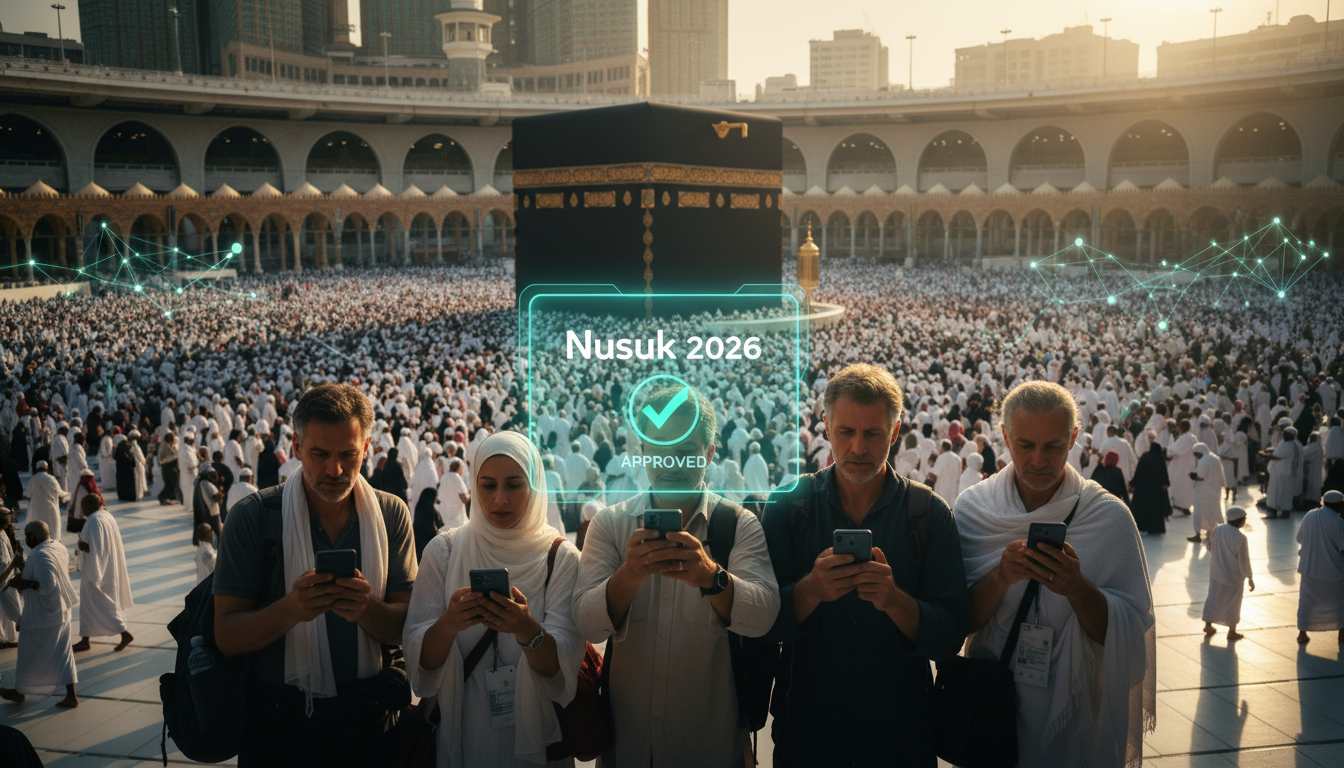
Saudi Arabia’s New Hajj Policy 2026 marks a distinctive turning point in the history of Islamic pilgrimage, introducing rigorous digital transformations and logistical overhauls that every prospective pilgrim from the USA needs to understand immediately. As the Kingdom accelerates towards its Vision 2030 goals, the Ministry of Hajj and Umrah has moved away from traditional booking agents, placing heavy reliance on AI-driven systems and strict health protocols. For American Muslims planning the journey of a lifetime, navigating these new regulations is no longer optional—it is the difference between an accepted visa and a cancelled trip.
The Shift to a Digital-First Ecosystem
The days of walking into a local travel agency in New York or Chicago to book a Hajj package are officially over. The 2026 policy doubles down on the centralization of bookings through the government-backed Nusuk platform. While previous years saw teething issues with the lottery system, the 2026 framework introduces a tiered application process designed to prioritize first-time pilgrims and manage crowd density more effectively.
This shift eliminates the “middleman” markups that plagued the industry for decades, but it also removes the personalized support many elderly pilgrims relied on. The system is now algorithmic, meaning errors in your digital profile can lead to immediate disqualification without human recourse.
1. The “Smart Hajj” Card is Now Mandatory
One of the most shocking changes in the New Hajj Policy 2026 is the total elimination of paper permits. Every pilgrim will be issued a “Smart Hajj Card” (or a digital equivalent via smartphone NFC). This card is not just for identification; it is linked to your GPS location, your medical history, and your accommodation access.
If a pilgrim attempts to enter the Holy Sites (Mina, Arafat, or Muzdalifah) without scanning their Smart Card, they face immediate fines and potential deportation. This system allows authorities to monitor crowd flow in real-time, preventing stampedes and ensuring safety, but it requires pilgrims to be tech-savvy and keep their devices charged at all times.
2. Strict Health & Age Protocols
Post-pandemic regulations have evolved into permanent health standards. The 2026 policy introduces a “Health Fitness Certificate” requirement. Pilgrims, particularly those from Western nations, must upload verified medical records proving they are free from chronic illnesses that could hinder their ability to perform the rites.
- Vaccination Mandates: Beyond standard immunizations, new requirements for respiratory virus boosters are being enforced.
- Age Caps: While not a blanket ban, priority is heavily skewed toward pilgrims under the age of 65. Those over 65 must provide proof of a physically fit companion.
- BMI Restrictions: Surprisingly, there are discussions regarding fitness levels to ensure pilgrims can handle the physical exertion of the Jamarat rituals.
3. Dynamic Pricing and Luxury Packages
The financial aspect of Hajj has changed drastically. The new policy categorizes packages into rigid tiers: Economy, General, and Luxury. However, the definition of “Luxury” has shifted. High-net-worth individuals from the USA can now access “Ultra-Premium” tiers that offer private transport inside the Holy Sites—a service previously reserved for dignitaries.
For those interested in high-end spiritual travel, checking out guides on luxury travel options is essential to understand what amenities are actually worth the premium price tag in Mecca’s rapidly developing hospitality sector.
4. The “No-Repeat” Rule Enforcement
Saudi authorities are strictly enforcing the “once every 5 years” rule, but with the 2026 policy, this has been extended in many cases to “lifetime priority.” The algorithm prioritizes those who have never performed Hajj. If you performed Hajj in the last decade, your chances of securing a spot through the lottery are mathematically slim to none, regardless of your financial status.
5. Mandatory Comprehensive Insurance
Perhaps the most critical administrative change is the restructuring of insurance. Basic travel insurance is no longer sufficient. The New Hajj Policy 2026 requires a specific, government-approved Hajj Insurance Policy that covers:
- Emergency medical evacuation.
- COVID-19 and infectious disease hospitalization.
- Flight cancellations due to visa errors.
- Lost luggage compensation within the Kingdom.
Travelers from the US must ensure their coverage meets these specific Saudi standards. We highly recommend reviewing our detailed guide on comprehensive travel insurance to ensure you aren’t turned away at Jeddah airport due to insufficient paperwork.
Navigating the Logistics
The digitization of Hajj is intended to streamline the experience, but for the unprepared, it can be a nightmare. The US State Department has issued advisories suggesting that pilgrims utilize only authorized guidance channels to avoid scams. The Nusuk platform is the only legitimate path for US citizens.
Conclusion: A Journey of Patience and Preparation
The New Hajj Policy 2026 is a bold step toward a safer, more organized pilgrimage. While the changes—ranging from biometric tracking to strict health vetting—may seem shocking and restrictive, they are designed to protect the millions who descend upon the Holy City.
Preparation is key. Ensure your digital literacy is up to par, your health is in check, and your paperwork is flawless. For those seeking spiritual peace and mental preparation before embarking on this monumental journey, or if you are looking for supplications to ease your travel anxiety, visit Wazifa Hub for resources on spiritual wellness and mental tranquility.