
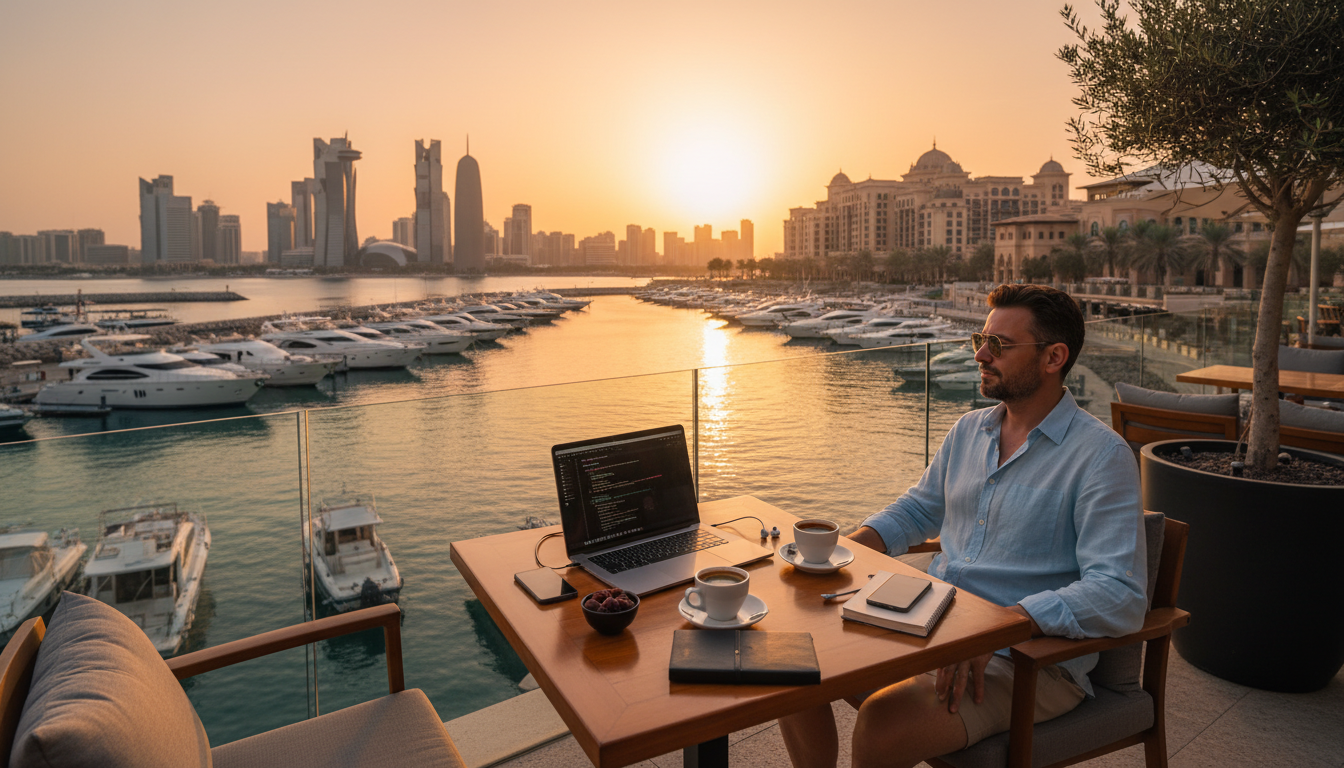
This is your ultimate Qatar Digital Nomad Visa guide for 2026, designed to help remote workers transition smoothly to life in Doha while navigating the evolving landscape of Middle Eastern residency. As the global workforce shifts further away from traditional office structures, the Gulf Cooperation Council (GCC) nations are in a fierce race to attract top talent. While Dubai often steals the spotlight, Qatar has quietly emerged as a sophisticated, safe, and tax-efficient alternative for US-based digital nomads seeking a blend of Arabian heritage and futuristic living.
For American remote workers, the allure of Qatar goes beyond its zero-income tax policy. It is about the lifestyle—sipping Karak chai in Souq Waqif one moment and attending a world-class sporting event in Lusail the next. Whether you are a software developer, a creative director, or a fintech consultant, understanding the nuances of securing residency in Doha is crucial for a successful relocation.
Why Choose Doha for Remote Work in 2026?
Doha has transformed from a quiet pearl-diving village into a sprawling metropolis that rivals Singapore and New York in terms of infrastructure. For the digital nomad, the value proposition is distinct.
1. World-Class Infrastructure
Qatar boasts some of the fastest internet speeds in the world, thanks to a nationwide 5G rollout and fiber-optic connectivity. Coworking spaces are booming, with hubs like Workinton and The Ministry of Coffee offering high-end amenities.
2. Safety and Stability
Qatar consistently ranks as one of the safest countries globally. For Americans used to the hustle and varying safety levels of major US cities, Doha offers peace of mind with virtually non-existent crime rates.
3. Tax Efficiency
While US citizens are still subject to IRS global taxation rules, the absence of local income tax in Qatar maximizes your take-home pay, allowing for a higher quality of life or significant savings.
Navigating the Visa Landscape: Options for Nomads
Unlike some European nations with a clearly labeled “Digital Nomad Visa,” Qatar utilizes a mix of residency permits that serve the same purpose. As we move into 2026, the government has streamlined these processes to boost the non-hydrocarbon economy.
The Real Estate Residency Option
One of the most straightforward ways to secure residency without a local employer is through property investment. Investing approximately $200,000 (USD) in designated freehold areas like The Pearl-Qatar or Lusail City grants you residency. This is a “Golden Visa” style approach that provides stability for long-term nomads.
The Hayya Platform Evolution
Originally created for the World Cup, the Hayya platform has evolved into a comprehensive entry portal. Extensions of the Hayya card often allow for longer stays, making it a viable option for “slowmads” who wish to test the waters in Doha for a few months before committing to full residency.
Business Incubation and Freelance Licenses
For those who want to formalize their status, setting up a company in the Qatar Financial Centre (QFC) or obtaining a freelance license allows you to sponsor your own residency. This route is ideal for consultants who bill clients in the USA but want a legal base in the Middle East.
To understand how this compares to other regional options, check out our detailed breakdown on digital nomad visa categories across the GCC.
Eligibility and Application Requirements
Regardless of the specific route you choose (Property or Business License), the core requirements for US citizens generally include:
- Valid Passport: Must have at least 6 months of validity remaining.
- Proof of Income: Bank statements showing a consistent income (usually upwards of $3,000 – $5,000 USD/month) to prove financial self-sufficiency.
- Health Insurance: Mandatory health insurance coverage is required for all residents and visitors.
- Clean Criminal Record: An FBI background check or police clearance certificate.
- Medical Screening: A standard blood test and chest X-ray performed in Qatar to rule out infectious diseases.
Cost of Living: Doha vs. Major US Cities
Living in Doha offers a luxury lifestyle at a fraction of the cost of New York, San Francisco, or London. However, costs can vary significantly based on your lifestyle choices.
Housing
A fully furnished one-bedroom apartment in a luxury tower in The Pearl-Qatar (comparable to Miami Beach) ranges from $1,800 to $2,500 USD per month. This typically includes gym access, pools, and concierge services.
Dining and Entertainment
Local dining is incredibly affordable, with delicious meals available for under $10. However, the hotel scene—where alcohol is served—can be pricey, with cocktails averaging $15-$20. Groceries are comparable to US prices, though imported American brands will carry a premium.
Transportation
The Doha Metro is world-class, clean, and cheap (less than $1 per ride). Uber is also widely available and generally cheaper than in the US. Most long-term residents, however, choose to rent or buy a car due to the heat in summer months.
Best Neighborhoods for Digital Nomads
Choosing the right location is vital for your work-life balance.
1. The Pearl-Qatar
This man-made island is the expat hub. It is walkable (in winter), filled with cafes, restaurants, and has a distinct Mediterranean vibe. It is the most popular choice for Western nomads.
2. Lusail City
Known as the “City of the Future,” Lusail is smarter, greener, and features incredible architecture. It is slightly quieter than The Pearl but offers modern apartments and great proximity to the Place Vendôme mall.
3. Msheireb Downtown Doha
For those who want a blend of heritage and modernity, Msheireb is a sustainable regeneration project. It is the cultural heart of the city, walkable, and packed with museums and hip coffee shops.
Internet and Coworking Culture
Qatar takes connectivity seriously. Ooredoo and Vodafone are the primary providers, offering 5G speeds that make video conferencing seamless.
Coworking spaces are growing rapidly. Workinton has multiple branches and offers a corporate vibe, while various cafes in Msheireb offer a more relaxed atmosphere for creatives. It is socially acceptable to work from cafes for hours, provided you keep ordering coffee or snacks.
Challenges to Consider
No destination is perfect. In Qatar, the primary challenge is the summer heat (June to September), where temperatures routinely exceed 110°F (43°C). During these months, life moves indoors. Additionally, the cultural conservatism requires a degree of respect regarding dress codes in public government buildings and malls (shoulders and knees covered), though expat zones like The Pearl are quite liberal.
Furthermore, bureaucracy can sometimes be slow compared to the lightning-fast digital services US citizens are used to. Patience is a virtue here.
Conclusion
Securing a foothold in Qatar in 2026 is an investment in a high-quality, safe, and tax-efficient future. Whether you utilize the property investment route or a freelance license, Doha welcomes digital nomads with open arms and Arabic hospitality. It is a place where you can work from a skyscraper in the morning and ride a camel in the desert at sunset.
For those seeking spiritual peace or Mental wellness while adjusting to a new culture and environment, visit Wazifa Hub for resources on mindfulness and inner tranquility.