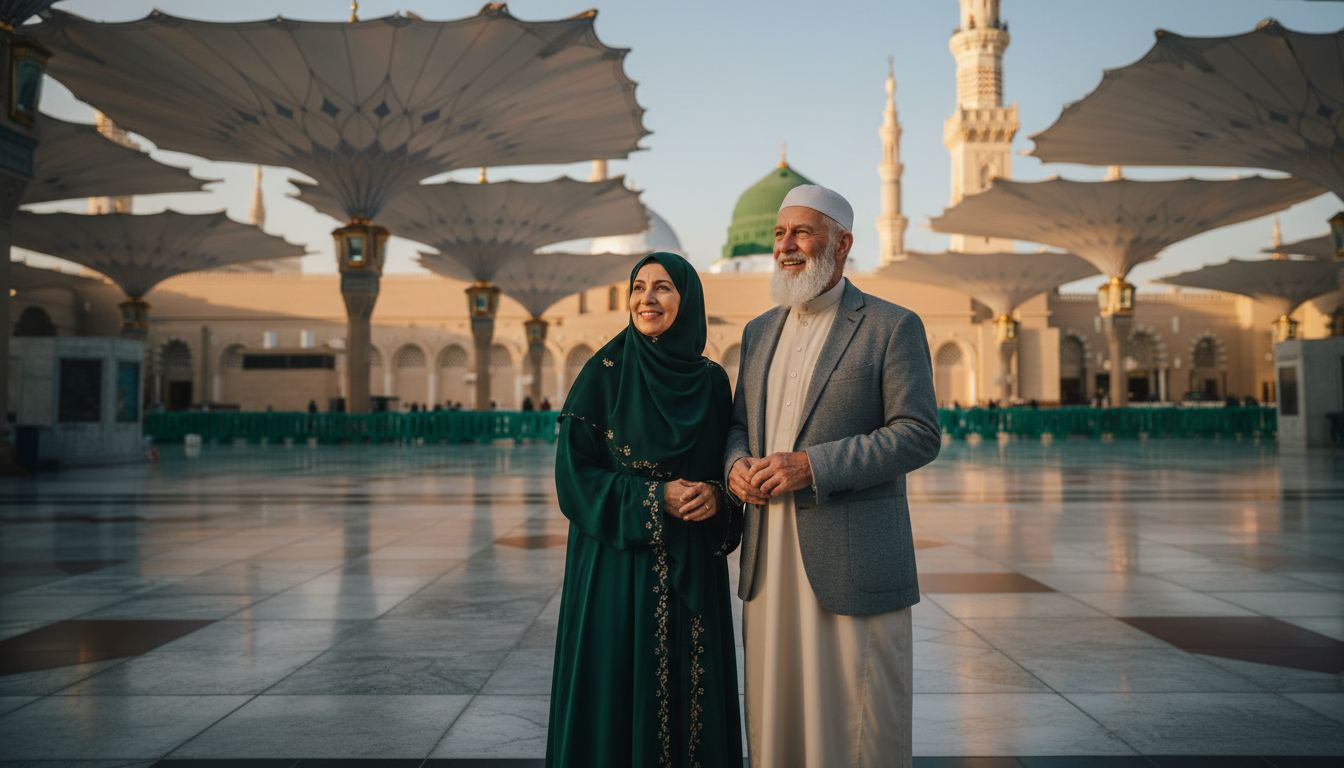
Retiring in Madinah is the ultimate dream for millions of American Muslims seeking spiritual tranquility in their golden years, and the landscape for making this dream a reality is shifting dramatically. For decades, long-term residence in the Holy City was notoriously difficult for foreigners without an active work contract. However, under the expansive umbrella of Saudi Vision 2030, the Kingdom is rolling out new frameworks that make 2026 a pivotal year for potential retirees.
As an American looking to trade the hustle of the US for the serenity of Al-Masjid an-Nabawi, understanding the nuances of the Premium Residency (often called the Saudi Green Card) is non-negotiable. This guide covers the financial requirements, legal shifts expected by 2026, and the practical realities of life in the City of Light.
The Saudi Premium Residency: Your Ticket to Madinah
Gone are the days when your residency was tied strictly to an employer (Kafeel). The Premium Residency Center now offers self-sponsorship options that are ideal for financially independent retirees. As we approach 2026, analysts predict further streamlining of these categories to attract foreign investment and residents.
There are currently two main tracks relevant to retirees:
- Limited Duration Residency: This is a renewable status tied to an annual fee (historically around 100,000 SAR per year). It grants you the right to live, rent property, and enter/exit the Kingdom freely.
- Permanent Premium Residency: This requires a significant one-time payment (historically 800,000 SAR). Once paid, you have permanent residency rights without annual fees.
Why 2026 is the Benchmark Year
Why is everyone talking about 2026? It marks a maturity point for many Vision 2030 initiatives. For American Muslims, this likely means:
- Digitized Bureaucracy: The application process is moving entirely online, reducing the need for “wasta” or middlemen.
- Healthcare Infrastructure: Madinah is undergoing a massive healthcare overhaul to support an aging population and medical tourism.
- Real Estate Opening: While foreigners are generally restricted from owning land in the Holy Cities proper, long-term leasehold laws (Usufruct rights) are evolving, potentially allowing 99-year leases for condos near the Haram.
Financial Requirements for American Retirees
To successfully apply for retiring in Madinah, you must prove financial solvency. The Kingdom wants to ensure you will not be a burden on the state. American applicants typically need to provide:
- Verified bank statements showing significant savings (exact amounts vary by visa type but expect to show $200k+ in liquid assets for stability).
- Proof of pension or passive income (Social Security, 401k distributions, or rental income).
- A clean criminal record from the FBI.
- A clean bill of health, specifically free from contagious diseases.
Cost of Living: Madinah vs. USA
One of the biggest draws is the cost of living arbitrage. Your dollar goes significantly further in Saudi Arabia than in New York, Chicago, or California.
Housing
Luxury apartments within a 15-minute drive of the Prophet’s Mosque can be rented for a fraction of the cost of a US mortgage. However, prices in the Central District (Markaziyah) remain high due to demand.
Utilities and Transport
While electricity subsidies have been reduced, utility costs remain lower than in the US. The Haramain High-Speed Railway connects you to Makkah and Jeddah in under two hours, making travel convenient.
Healthcare and Insurance Considerations
Before making the move, you must secure comprehensive private health insurance. While Saudi healthcare is excellent, free government access is generally reserved for citizens. Make sure to check our guides on travel and expat insurance to find a policy that covers geriatric care and emergency evacuation if necessary.
Family and Connectivity
Retiring doesn’t mean isolation. The Premium Residency allows you to sponsor family members. If you have younger family members interested in joining you but they are still working, they might want to explore the digital nomad visa options that are becoming increasingly popular in the region.
The Spiritual Payoff
Ultimately, the logistics are secondary to the primary goal: proximity to the Prophet (PBUH). Living in Madinah offers a pace of life that is psychologically and spiritually restorative. The ability to pray five times a day in the Haram, the community spirit during Ramadan, and the general “Sakinah” (tranquility) of the city are priceless assets that no 401k can buy.
For those seeking to enhance their spiritual journey and mental wellness during this transition, finding peace of mind is essential. For more resources on spiritual peace and supplications, visit WazifaHub.