
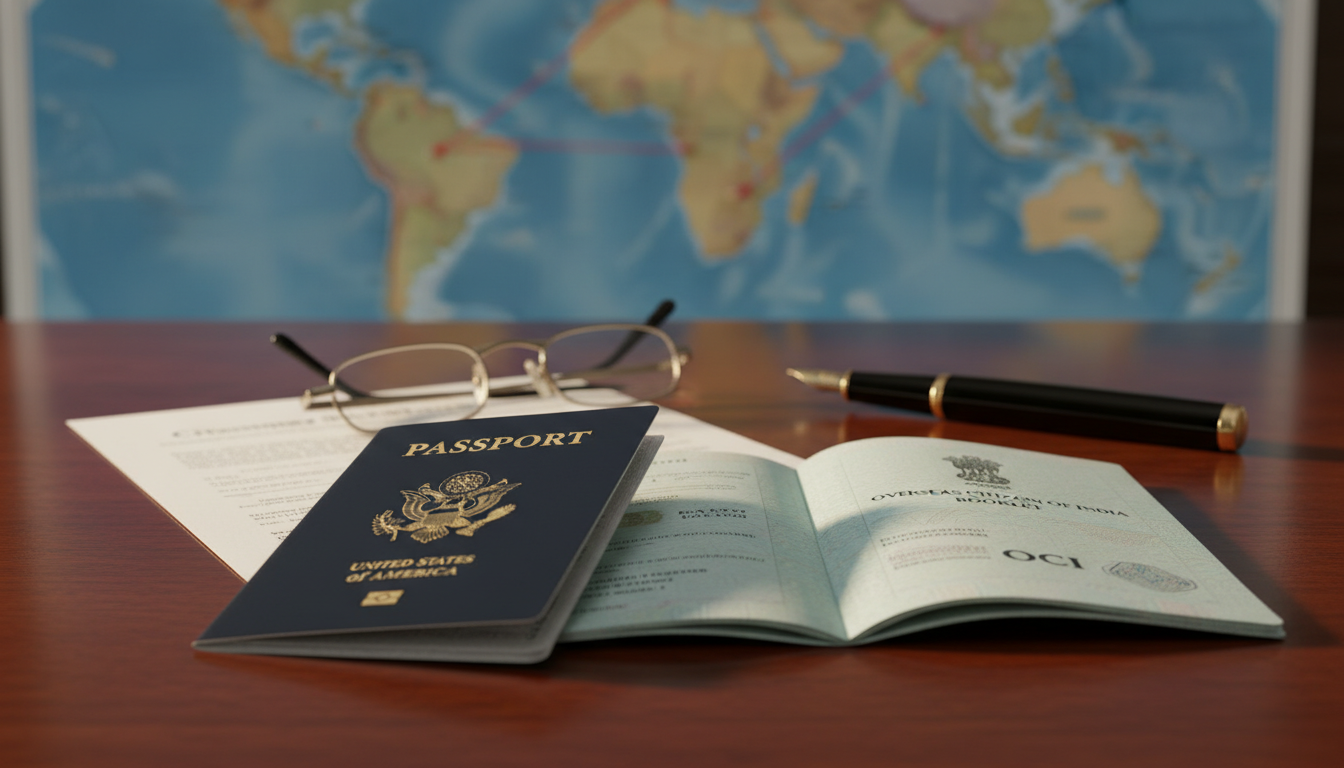
The concept of US India dual citizenship is a subject that confuses, frustrates, and often surprises thousands of Americans and Indian expatriates every single year. If you are holding a United States passport and dreaming of also holding an Indian passport simultaneously, the reality of the situation might come as a shock. Unlike the United States, the United Kingdom, or Canada, which generally allow their citizens to hold multiple passports, the Republic of India maintains a very strict stance on nationality.
For many Americans with Indian heritage, or US citizens looking to retire in the vibrant chaos of Mumbai or the serene backwaters of Kerala, understanding the legal framework is essential before booking a flight or buying property. In this comprehensive guide, we will dismantle the myths, explain the “next best thing” known as the OCI card, and ensure you stay on the right side of international law.
The Hard Reality: Does India Allow Dual Citizenship?
Let’s rip the bandage off immediately: No, India does not allow dual citizenship.
According to the Constitution of India and the Citizenship Act of 1955, an Indian citizen cannot simultaneously hold the citizenship of another country. The moment you acquire a foreign passport (such as a US passport), you automatically lose your Indian citizenship. This is non-negotiable.
This is the “shocking truth” that catches many people off guard. There is a misconception that because you were born in India, you are Indian forever. However, under Section 9 of the Citizenship Act, legal termination of Indian citizenship happens the moment you are naturalized elsewhere.
The “Golden Ticket” Alternative: The OCI Card
While full US India dual citizenship is legally impossible, the Indian government recognized the massive diaspora community’s desire to stay connected to their roots. To solve this, they introduced the Overseas Citizen of India (OCI) scheme.
Often mistakenly referred to as “dual citizenship lite,” the OCI card is actually a lifelong visa. It is a smart card that allows holders to live and work in India indefinitely, but it is not a passport.
What Can You Do With an OCI Card?
- Multiple Entry, Lifelong Visa: You can enter India as many times as you want for the rest of your life.
- Live and Work: You can live in India indefinitely and work for private companies without needing an employment visa.
- Financial Parity: In financial, economic, and educational fields, OCI holders are generally treated on par with Non-Resident Indians (NRIs).
- Property Ownership: You can purchase residential and commercial property in India.
What Can You NOT Do? (The Limitations)
Despite the benefits, the OCI card draws a hard line in the sand regarding political rights:
- You cannot vote in Indian elections.
- You cannot hold public office (e.g., become a Minister or President).
- You cannot buy agricultural land or plantation properties (farmhouses require special permission).
- You cannot undertake missionary, mountaineering, or research work without special permission.
Can a Born-and-Bred American Become an Indian Citizen?
What if you have no Indian heritage? Can a standard US citizen simply move to India and become a citizen? Yes, but the cost is high.
Foreigners can acquire Indian citizenship through naturalization. To do this, you generally must have resided in India for 12 years (specifically, an aggregate of 11 years out of the preceding 14 years, plus one continuous year before applying).
However, here is the catch that brings us back to the focus keyword: to finalize your Indian citizenship, you must renounce your US citizenship. You would have to hand over your powerful US passport to the American embassy. For most people, trading a US passport for an Indian one is not a strategic travel move, given the visa-free access differences.
Navigating the Legal Landscape for Digital Nomads
If you are a location-independent worker looking to spend significant time in India without giving up your US passport, the OCI card (if you are eligible via heritage/marriage) is your best route. If you are not of Indian origin, you will need to look into long-term Employment Visas or Business Visas.
For those exploring global residency options, it is vital to understand which countries offer flexible digital nomad visa programs that might lead to true dual citizenship, unlike the restrictive Indian system.
Steps to “Renunciation” and Applying for OCI
If you were an Indian citizen who just became an American, follow this workflow to avoid legal trouble:
- Acquire US Naturalization Certificate: This is your proof of new citizenship.
- Apply for Renunciation of Indian Citizenship: Submit your Indian passport to VFS Global (the outsourcing partner for the Govt of India in the USA). You will receive a Surrender Certificate.
- Apply for OCI: Once you have the Surrender Certificate, you can apply for the OCI card.
The process can take anywhere from 2 to 4 months depending on the consulate’s backlog.
Why the Confusion Persists?
The confusion surrounding US India dual citizenship largely stems from the name “Overseas Citizen of India.” The word “Citizen” is in the title, but legally, you are a foreign national. The Indian government uses this terminology to foster a sense of belonging, but legally, you are an American tourist with special privileges.
Conclusion: Embrace the OCI, Forget the Passport
While the shocking truth is that full dual citizenship is illegal, the OCI card offers 95% of the benefits that most people are looking for. It allows you to maintain your connection to your motherland while enjoying the global mobility of a US passport. Unless you plan on running for office in New Delhi or buying a farm in Punjab, the OCI is the perfect compromise.
Navigating immigration laws, renunciation certificates, and visa applications can be incredibly stressful. The anxiety of paperwork can take a toll on your peace of mind. For those seeking spiritual grounding and mental wellness during these transition periods, we recommend exploring resources for inner peace at Wazifa Hub.