
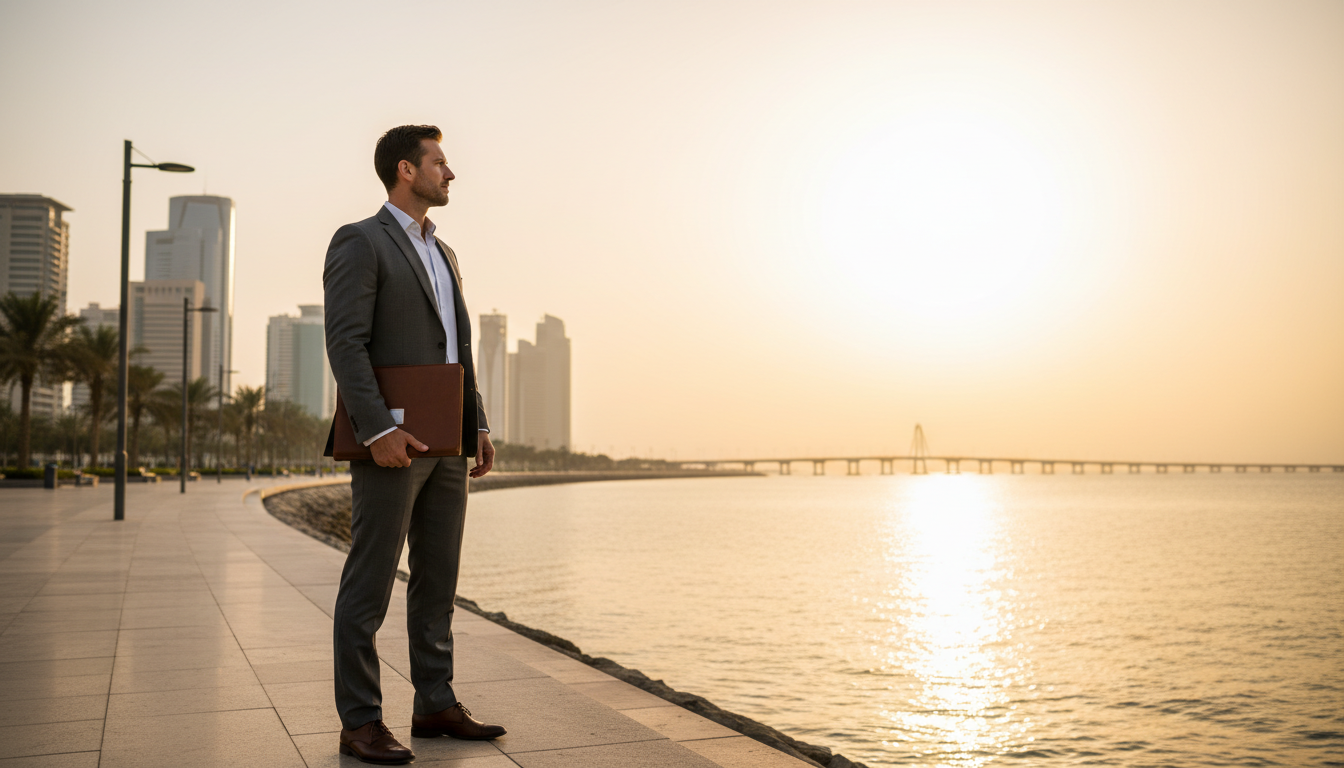
Securing a Work Visa for Dammam in 2026 is the critical first step for any American professional looking to capitalize on Saudi Arabia’s booming energy, logistics, and construction sectors. As the Kingdom accelerates toward the realization of Vision 2030, Dammam—the administrative capital of the Eastern Province—has transformed into a cosmopolitan hub offering lucrative tax-free salaries and a high standard of living. However, the bureaucratic process of relocating from the USA to Saudi Arabia remains complex and requires meticulous attention to detail.
Whether you are an engineer heading to Aramco or a teacher joining an international school, understanding the evolving regulations is paramount. This guide breaks down the entire process into an actionable checklist, ensuring your transition to the “Pearl of the Gulf” is as smooth as possible.
1. Understanding the Sponsorship (Kafeel) System
Before you even begin filling out forms, you must understand the foundation of Saudi employment law. You cannot simply apply for a work visa on your own; you must be sponsored. Your employer acts as your Kafeel (sponsor). In 2026, while the Kafala system has undergone significant reforms to allow for greater job mobility, the initial entry still relies heavily on the employer initiating the process.
Your employer in Dammam must obtain a Visa Block approval from the Ministry of Human Resources and Social Development (MHRSD). Once this is approved, they will send you the Visa Authorization Number and a Power of Attorney allowing a visa agency in the US to handle your passport. Without these two documents, the process cannot begin.
2. Document Attestation: The Paperwork Marathon
For US citizens, the most time-consuming aspect of obtaining a Saudi employment visa is the authentication of academic and professional documents. Saudi authorities require proof that your degrees are legitimate. This is not a simple notary stamp; it involves a multi-step chain of verification.
The Chain of Authentication:
- Notarization: Your diploma and transcripts must be notarized by a local notary public.
- State Secretary Authentication: The documents must then be certified by the Secretary of State in the state where the notary is commissioned.
- U.S. Department of State: The documents move to Washington D.C. for federal authentication.
- Saudi Cultural Mission (SACM): Your degrees must be uploaded to the SACM portal for verification. They will contact your university directly.
- Saudi Embassy Attestation: Finally, the documents are physically stamped by the Saudi Embassy in Washington D.C. or the consulate in Houston/New York.
This process can take anywhere from 4 to 12 weeks. Do not resign from your current job until this phase is well underway.
3. The Medical Examination (GAMCA/Wafid)
To protect public health, Saudi Arabia enforces strict medical screenings for all incoming residents. You must visit a medical center approved by the Gulf Health Council (formerly GAMCA, now often referred to as the Wafid program).
The examination checks for:
- Infectious diseases (HIV/AIDS, Hepatitis B and C).
- Tuberculosis (Chest X-ray required).
- General physical fitness (Vision, hearing, vital signs).
If you test positive for any major infectious disease, the visa will be automatically denied. Ensure you receive the “Fit for Work” certificate, which must be uploaded to the Enjaz system by the medical provider.
4. The Enjaz Registration and Fingerprinting
Saudi Arabia utilizes an online visa platform called Enjazit. You (or your visa agent) must complete the online application, pay the visa fee (usually around $100-$300 depending on the reciprocal agreements in 2026), and upload your photo.
Simultaneously, depending on the current consulate requirements in 2026, you may be required to undergo biometric fingerprinting at a VFS Tasheel center or authorized service provider in the US before your passport is submitted.
5. Stamping the Passport
Once your documents are attested, your medical is clear, and the Enjaz application is filed, you will submit your physical passport to the Saudi Embassy via an authorized travel agency. The Embassy does not accept walk-in applications from individuals.
Required documents for the package usually include:
- Original Passport (valid for at least 6 months with two blank facing pages).
- The Medical Report (original).
- Attested Degree/Diploma.
- Signed Employment Contract.
- Three passport-sized photographs (white background).
- The Visa Authorization number provided by the Dammam employer.
6. Arrival in Dammam and the Iqama Process
Congratulations! You have your visa stamped. However, the visa in your passport is only a single-entry visa valid for 90 days. It allows you to enter the Kingdom, but it is not your residency permit.
Upon landing at King Fahd International Airport (DMM) in Dammam, you will pass through immigration where your fingerprints and photo will be taken again. Once you clear customs, your employer’s PRO (Public Relations Officer) should meet you.
The 90-Day Countdown
From the moment you arrive, your employer has 90 days to process your Iqama (Resident Identity Card). This involves:
- Another medical test (lighter version) within Saudi Arabia.
- Setting up a local bank account.
- Registering on the Absher portal (the government e-services app).
Your Iqama is your lifeline. You cannot get a SIM card, rent an apartment, or open a bank account without it. Carrying your Iqama at all times is mandatory by law.
7. Living in Dammam: What to Expect in 2026
Dammam is the industrial heartbeat of the Kingdom, but it is also a city of hidden gems. The Dammam Corniche offers miles of pristine waterfront parks, perfect for evening jogs or picnics. The city is connected to the island nation of Bahrain via the King Fahd Causeway, making weekend getaways incredibly easy.
Housing: Most Western expats prefer living in “Compounds.” These are gated communities with high security, offering amenities like pools, gyms, and western-style social norms. In 2026, new luxury compounds in the Al-Khobar and Dammam areas offer smart-home features and community events tailored to US expats.
Transportation: While the public transport network is expanding, owning a car is still essential in the Eastern Province. With your Iqama and a valid US license, you can easily obtain a Saudi driving license.
Final Thoughts
Moving to Saudi Arabia is a bold step that offers tremendous financial and professional rewards. By following this checklist for your Work Visa for Dammam in 2026, you navigate the complexities of immigration with confidence. Be patient, stay organized, and prepare for an adventure in one of the world’s most rapidly transforming nations.
Relocating to a new country can be mentally taxing. If you are seeking spiritual peace or mental wellness resources during this major life transition, we recommend visiting Wazifa Hub for guidance and tranquility.